Engineered to withstand coastal humidity, continuous field duty, and severe vibration. Verified by rigorous cyclic loading tests.
A macro-economic analysis of procurement requirements across offshore logistics corridors, heavy engineering depots, and fleet maintenance ecosystems in Georgetown.
Georgetown is experiencing an unprecedented surge in industrial capitalization, largely catalyzed by massive offshore energy discoveries, deepwater port expansions, and inland highway corridors. This rapid evolution has generated non-negotiable procurement demands for heavy-duty workshop infrastructure capable of supporting around-the-clock maintenance operations for offshore support vessels (OSVs), deep-sea drill rigs, and heavy civil construction assets.
Situated within an equatorial coastal perimeter characterized by relative atmospheric humidity frequently exceeding 85% and high ambient salinity, Georgetown presents extreme corrosive stress for tool storage. Standard commercial metal cabinets succumb to blistering, delamination, and slide seizure within 6 to 12 months. Industrial procurers mandate thermoset electrostatic powder coatings tested beyond ASTM B117 standards to avert catastrophic asset degradation.
Global multi-tier operators entering the Georgetown industrial basin—such as multinational energy supermajors, engineering EPC contractors, and marine freight operators—impose zero-tolerance workplace safety standards. Lockable, interlocking drawer configurations prevent multi-drawer tilt hazards, while DEKRA-audited build integrity guarantees static payload stability across turbulent transit stages and uneven concrete workshop surfaces.
In high-stakes industrial arenas, the humble mechanics of tool storage and workstation architecture are direct determinants of operational uptime, Mean Time to Repair (MTTR), and labor productivity. For enterprise procurement directors overseeing installations in Georgetown, the cost of tool storage is never evaluated on initial purchase price alone; rather, it is factored across total cost of ownership (TCO), failure-free service lifespan, and worker safety compliance.
A tool cabinet under severe industrial service experiences multidirectional mechanical vectors. When loaded with dense pneumatic impact drivers, calibration wrenches, hydraulic jacks, and precision torque devices, drawer bodies must endure substantial dynamic shear stresses during transit across expansion joints and unpaved yard pads. Our manufacturing protocols utilize SPCC cold-rolled steel plates with nominal yield strengths ranging between 210 and 240 MPa.
In Georgetown’s humid, chloride-rich marine air, micro-porosities in inferior paint coatings lead to galvanic pitting and rapid structural corrosion behind visible surfaces. To counteract this vulnerability, our 4.0 production facility implements an automated 7-stage pre-treatment line:
The bare cold-rolled steel undergoes alkaline degreasing, twin deionized water rinsing, micro-crystalline zinc-zirconium phosphating passivation, and a de-ionized seal rinse. The substrate is then electrostatically charged and coated with an architectural-grade polyester-epoxy hybrid powder (60–90 µm DFT) before cross-linking inside a continuous 200°C convective curing oven. This creates an impenetrable molecular barrier demonstrating zero blister formation following 500 hours of continuous ASTM B117 neutral salt spray exposure.
| Engineering Parameter | Dingda DEKRA-Audited SPCC Platform | Standard Commercial Asian Supplier | Low-Cost Market Retail Grade |
|---|---|---|---|
| Primary Steel Substrate | 0.8 mm – 1.2 mm Prime Cold-Rolled SPCC | 0.5 mm – 0.6 mm Commercial Recycled Steel | 0.4 mm Hot-Rolled Stamped Sheet |
| Corrosion Resistance Rating | ASTM B117 >500 Hours Neutral Salt Spray | ASTM B117 <96 Hours Salt Spray | Untested; Flash Rusting within 30 Days |
| Drawer Slide Rating & Life | 45 kg Ball-Bearing Slide / 50,000 Cycles | 20 kg Friction Slide / 10,000 Cycles | 12 kg Non-Bearing Plastic Runner / <3,000 Cycles |
| Safety Interlocking Mechanism | Mechanical Anti-Tilt Central Linkage | Single Cam-Lock Only (Tilt Hazard) | Non-Lockable or Thin Sheet Key |
| Caster Wheel Specifications | 5" Industrial Polyurethane (PU) with Dual-Lock | 4" Hard PVC Castors (Prone to Cracking) | 3" Polypropylene Swivel (No Brake) |
| Audited Compliance Framework | DEKRA Tested, ISO 9001:2015, CE, RoHS | Self-Declared Compliance | No Quality Management Verification |
How automated sheet-metal fabrication lines in Zhejiang achieve micron-level repeatability and unassailable cost-yield parity for international distributors.
By leveraging CNC fiber laser cutting systems and robotic panel benders, each sheet metal component maintains structural tolerances within ±0.05 mm. This exact dimensional discipline eliminates structural skewing, ensuring that rolling trolleys remain perfectly square even when subjected to torsional chassis flex on uneven maritime dockyards.
Manual welding produces inconsistent thermal heat-affected zones (HAZ), which become primary sites for stress fractures. Our production lines deploy multi-axis robotic spot-welding units programmed with digital heat-input feedback, delivering uniform weld nuggets that distribute payload stresses uniformly across cabinet chassis skeletons.
Shipping logistics from Ningbo/Shanghai to Georgetown require transit resilience across extensive sea lanes. Our export packaging utilizes high-density expanded polyethylene (EPE) corner protectors, vacuum-sealed polyethylene moisture bags with container desiccants, and 5-ply double-wall kraft cartons rated for high burst strengths.
Purpose-matched configurations designed for high-consequence operational environments throughout the Greater Georgetown industrial belt.
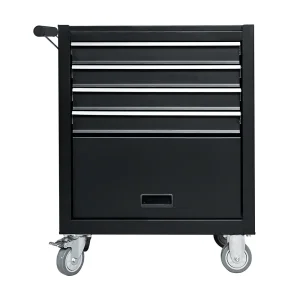
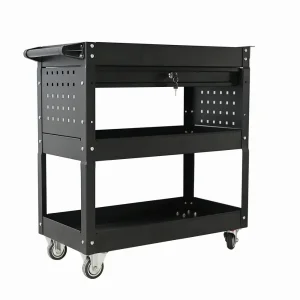
Staged on quay-side maintenance workshops and vessel turnaround docks where salt-spray exposure is severe. Heavy-duty rolling cabinets with total-lock brake casters ensure mobile mechanics can stage high-value subsea torque tools directly beside gangways without risking accidental roll-away.
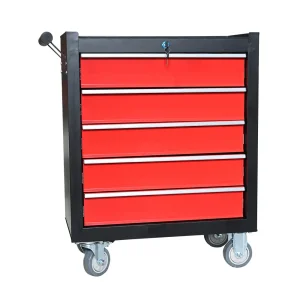
High-capacity rolling trolleys deployed in 24/7 service bays managing prime movers, articulated dump trucks, and hydraulic excavators. Five-drawer layouts allow clean separation of heavy sockets, pneumatic drivers, and hydraulic test gauges, reducing tool hunt times by up to 35%.
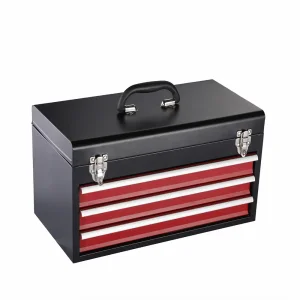
Stationary and mobile modular tool chests equipped with central cylinder lockouts to ensure compliance with strict lock-out/tag-out (LOTO) safety protocols during planned shutdowns, electrical turnaround maintenance, and refinery overhaul phases.
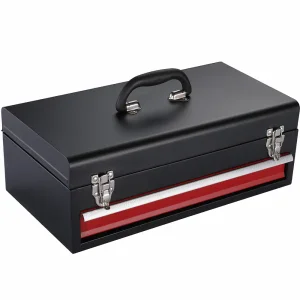
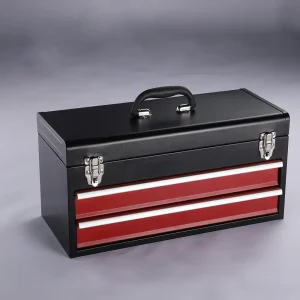
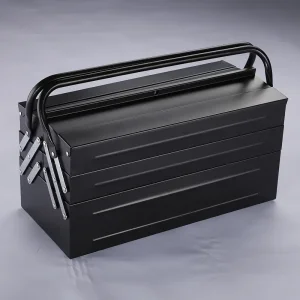
Rugged cantilever toolboxes and single-drawer portable steel storage units fitted into the beds of service pickups and mobile field maintenance trailers, offering watertight structural protection for field technicians working on interior highway and bridge construction sites.
Clear, unvarnished answers addressing steel grades, lead times, corrosion treatments, and OEM custom tooling parameters.
Dingda’s industrial tool cabinets and mobile trolleys are manufactured in compliance with ISO 9001:2015 quality control systems and audited against DEKRA performance protocols. Structural load testing includes dynamic weight distribution verification, 50,000 drawer extension cycles at maximum rated payload, and 500-hour ASTM B117 neutral salt spray corrosion tests on coated metal panels.
We do not use standard air-dried enamel paints. All steel chassis pass through an automated 7-stage pre-treatment tunnel that degreases and coats the metal with a microcrystalline zinc-zirconium conversion layer. This is immediately followed by robotic electrostatic powder application of thermosetting polyester-epoxy resin, cured at 200°C to achieve a pinhole-free 60–90 µm DFT protective armor.
Standard catalog models maintain an MOQ of 100 units per SKU, while mixed-container configurations (combining roller cabinets, cantilever boxes, and portable chests) can be consolidated for initial trial orders. Full OEM/ODM custom tooling projects carry an MOQ of 300 units. Mass manufacturing is completed within 25 to 35 business days post sample sign-off.
Yes. We deliver turnkey private label services for industrial distributors, retail hardware chains, and commercial fleets across the Caribbean and Americas. Options include high-precision screen-printed or laser-etched badges, bespoke RAL colorways (including corporate matching), custom high-density EVA foam laser-cut drawer inserts, and palletized distribution-ready retail packaging.
Every single unit is packed with molded EPE shock corners, wrapped in heavy-gauge poly-stretch film to seal against ambient ocean humidity, and enclosed within a 5-ply heavy double-wall fluted corrugated carton. Industrial desiccants are inserted into each drawer cavity and inside the shipping container to actively control condensation during transoceanic transit.
Complete your fleet workshop layout with lockable cantilever cases, heavy-duty mobile service trolleys, and outdoor utility field cabinets.
Connect directly with our senior application engineers to obtain official DEKRA test dossiers, custom sheet metal CAD designs, container packing simulations, and CIF Georgetown landed cost models.