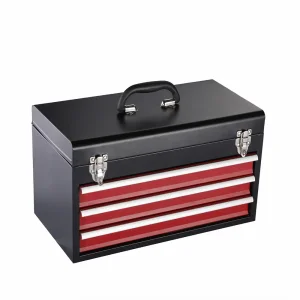
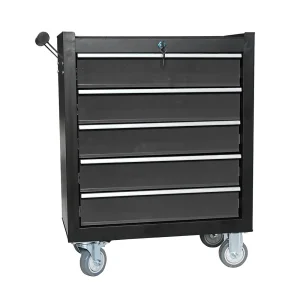
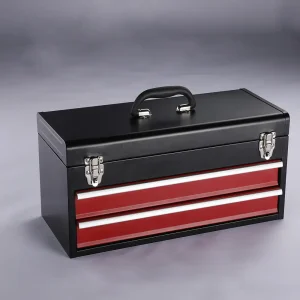
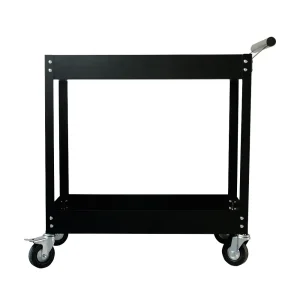
High-capacity workshop solutions integrated with industrial-grade caster wheel architectures for extreme durability.
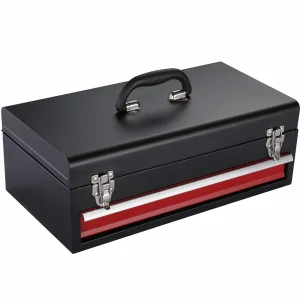
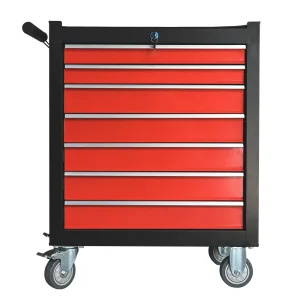
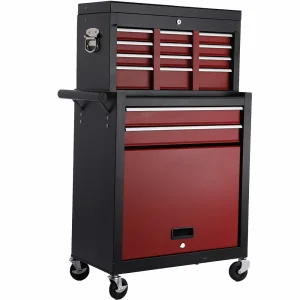
Evaluating global industrial mobility demands, regulatory safety frameworks, and the engineering necessity of TÜV Rheinland certified componentry.
In modern industrial manufacturing, material handling equipment, and automated logistics systems, the humble industrial trolley wheel represents a mission-critical failure point. As global manufacturing facilities shift toward Industry 4.0 paradigms—integrating Automated Guided Vehicles (AGVs), Autonomous Mobile Robots (AMRs), and modular heavy-duty tool storage cabinets—the performance metrics demanded from heavy-duty industrial casters have escalated exponentially.
Purchasing directors and structural engineers no longer view industrial caster wheels as basic commodities; they are engineered dynamic systems required to survive extreme load shifts, chemical exposure, thermal variations, and millions of continuous rolling cycles. The integration of TÜV Rheinland certification (governed under standards such as DIN EN 12530 to DIN EN 12533) provides buyers with verifiable proof of structural fatigue limits, dynamic impact resilience, and anti-static or conductive compliance.
TÜV testing protocols eliminate the risks associated with non-compliant, low-grade imported casters that frequently suffer from tread delamination, kingpin shear, and premature bearing seizure under continuous dynamic loads. Certification standardizes several vital performance criteria:
How localized industrial clusters, vertically integrated metallurgy, and advanced polymer synthesis drive unmatched global cost-to-performance ratios.
Chinese OEM trolley wheel factories benefit from raw material proximity—combining localized high-purity cold-rolled steel stamping, precision forging of swivel raceways, and automated polyurethane (PU) polymer casting under one regional roof.
State-of-the-art factories employ computerized meter-mix injection machinery for polyurethane treads, ensuring 0% air void formation, precise Shore hardness targeting (80A to 75D), and superior molecular bonding to cast-iron or aluminum hubs.
Every batch of TÜV-certified wheels undergoes automated dimensional optical sorting, hardness durometer validation, salt spray anti-corrosion chamber testing, and computerized radial fatigue stress monitoring.
A primary point of failure in low-cost trolley wheels is mechanical tread detachment from the core hub. Leading Chinese TÜV factories utilize plasma surface activation before chemical primer application. This creates covalent chemical bonds between the polyurethane elastomer and metallic wheel centers, resulting in peel strengths exceeding 25 N/mm—more than double the standard ISO 8033 requirement.
Detailed physical property comparisons engineered for industrial buyers, plant managers, and equipment design engineers.
| Material Type | Shore Hardness | Load Range (Per Wheel) | Floor Protection | Rolling Resistance | Target Operating Environments |
|---|---|---|---|---|---|
| Cast Polyurethane (CPU) | 92A - 95A | 300 kg – 2,500 kg | Excellent (Non-Marking) | Very Low | Automotive Assembly, Aerospace Hangars, AGV Systems |
| Thermoplastic Rubber (TPR) | 65A - 85A | 80 kg – 400 kg | Superior (Soft Floor) | Moderate | Medical Facilities, Cleanrooms, Light Tool Trolleys |
| Cast Iron / Forged Steel | 160 - 210 HB | 1,000 kg – 10,000 kg | Poor (High Impact) | Extremely Low | Foundries, Heavy Steel Fabrication, Extreme Heat Work |
| High-Impact Monolithic Nylon | 75D - 85D | 400 kg – 3,000 kg | Moderate | Low | Chemical Processing, Cold Storage (-30°C), Food Industry |
| ESD Conductive PU | 90A - 93A | 250 kg – 1,500 kg | Excellent | Low | Electronics Manufacturing, Semiconductor Assembly, Explosive Zones |
To prevent localized overload during transport over uneven factory flooring, experienced system engineers apply the official safety factor calculation for 4-wheeled trolley configurations:
T = (E + Z) / (N - 1) × S
Where: T = Required Load Capacity Per Caster | E = Dead Weight of Trolley | Z = Maximum Payload | N = Number of Wheels (Typically 4) | S = Dynamic Safety Factor (1.3 for Smooth Floors, 1.5–2.0 for Rough Floors / Obstacles).
From automotive body-in-white plants to high-speed automated warehouses: How specialized casters deliver reliability.
Workshops demand heavy-duty twin-wheel casters with directional locks. Wheels must resist metal swarf, cutting oils, and intense mechanical shocks from robotized drop loads while ensuring minimal ergonomic pulling effort for assembly operators.
Smart logistics hubs require precision drive wheels and heavy-duty spring-loaded casters equipped with precision ball bearings. TUV certification guarantees high radial runout tolerance (< 0.05mm) for precise dead-reckoning navigation.
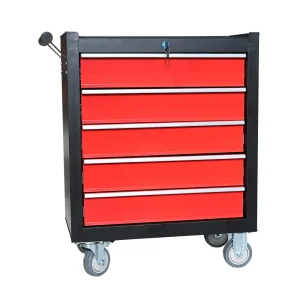
Rolling tool chests and modular cabinets (7 to 13 drawers) require heavy-gauge cold-rolled steel bracket casters with dual foot-operated total lock systems to safely support up to 1,500 kg without tip-over risks.
Evaluating supply chain resilience, carbon footprint reductions, smart telemetry integration, and ergonomic compliance.
European and North American procurement mandates are increasingly requiring suppliers to demonstrate carbon-neutral production pathways and non-toxic chemical formulations. Chinese leading caster factories are pioneering bio-based polyols for PU wheel manufacturing, reducing reliance on petrochemical precursors while maintaining Shore durometer toughness and tear resistance.
Next-generation industrial mobility systems are integrating embedded RFID chips and micro-strain sensors within the caster core hub. These smart casters transmit real-time data regarding cumulative distance traveled, dynamic weight distributions, bearing heat generation, and predictive maintenance alerts directly to plant Maintenance Management Systems (CMMS).
Global tool brand owners and industrial distributors are moving away from off-the-shelf caster models. Sourcing departments demand customized mounting plate dimensions, proprietary color-matched tread polyurethane (RAL color matching), laser-etched brand iconography on steel brackets, and specialized powder-coated anti-corrosion finishes capable of enduring 500-hour salt spray tests.
Expert answers regarding quality verification, TÜV standards, factory audits, and wheel engineering specs.
Factory-direct OEM/ODM rolling tool carts, metal toolboxes, and interlocking storage solutions.