Global Engineering Architecture, Precision Sheet Metal Metallurgy, and High-Yield B2B Supply Chain Optimization for OEM Empty Tool Storage Systems
Heavy-duty structural empty cases engineered for modular EVA inserts, customized branding, and high-load commercial utility.
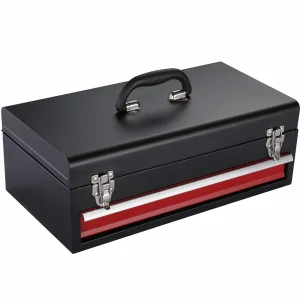
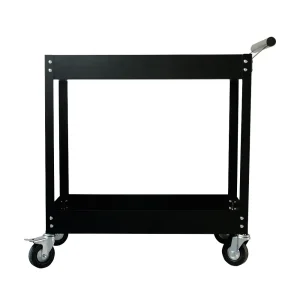
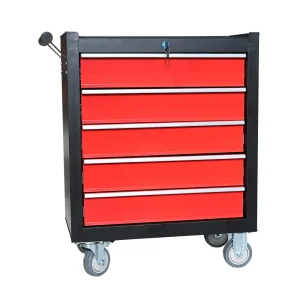
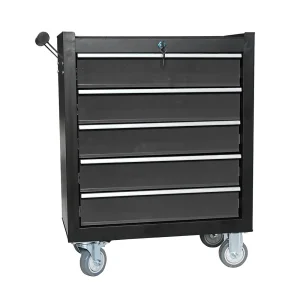
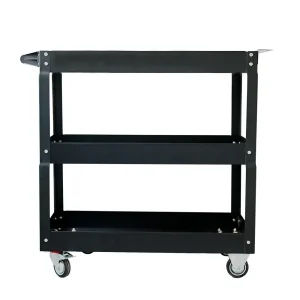
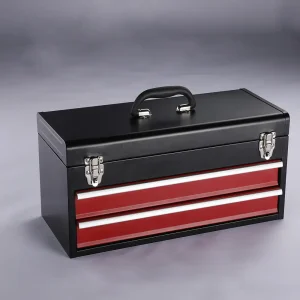
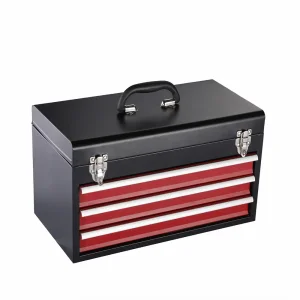
Why international hardware brands, aerospace maintenance firms, and tool distributors are shifting aggressively toward bespoke empty shell procurement.
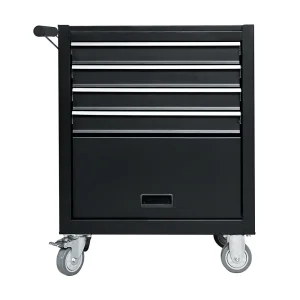
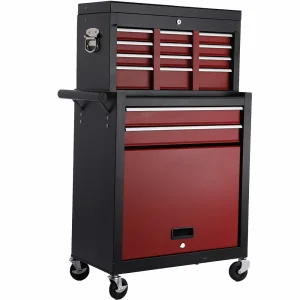
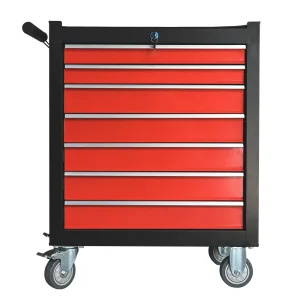
Modern service bays demand standardized mobile roller cabinets with custom depth profiles. Empty tool box shells allow automotive service networks to implement uniform 5S workplace layouts across multi-site dealership franchises.
FOD (Foreign Object Debris) prevention mandates absolute visual tool control. OEM empty cantilever boxes and metal chests are customized with two-tone shadow boards to immediately highlight missing tools on flight ramps.
Offshore oil platforms, wind turbine installations, and jobsite trailers require IP-rated, weather-resistant, lockable heavy-gauge steel tool chests capable of enduring severe vibrations and saline atmospheric exposure.
From raw sheet steel selection to sub-micron robotic welding, our OEM empty tool box manufacturing relies on rigorous mechanical standards.
We primarily utilize premium-grade SPCC (Cold-Rolled Carbon Steel Sheet) ranging from 0.8mm to 1.2mm in nominal thickness for cabinet structural frames, and up to 1.5mm for heavy-duty base chassis plates. Cold rolling significantly enhances yield strength and tensile rigidity compared to hot-rolled alternatives, ensuring the empty tool box resists structural warping under loads exceeding 500 kg.
For ultra-portable applications or specialized marine work environments, we offer high-grade 5052-H32 Aluminum Alloy and 304 Stainless Steel fabrications, delivering exceptional strength-to-weight ratios and intrinsic anti-corrosion properties.
Bare steel is vulnerable to humidity and industrial chemical degradation. Our automated finishing lines execute a rigorous 9-stage pre-treatment cleaning phase, including degreasing, zinc phosphate conversion coating, and DI water rinsing.
Following pre-treatment, products receive an electrostatic thermosetting epoxy-polyester powder coating cured at 180°C to 200°C. This forms a resilient 60–80 micron protective shell featuring superior scratch resistance, UV stability, and resistance to automotive fluids (engine oil, brake fluid, hydraulic oil).
| Engineering Parameter | Standard Commercial Grade | Industrial OEM Heavy-Duty Grade | Custom OEM Options |
|---|---|---|---|
| Frame Sheet Thickness | 0.6 mm - 0.8 mm SPCC | 1.0 mm - 1.2 mm SPCC Steel | 1.5 mm Stainless Steel / Aluminum |
| Drawer Slide Mechanics | Single-Extension Friction / 25kg Ball-Bearing | Heavy-Duty Dual Ball-Bearing (45kg - 75kg rating) | 120kg Soft-Close Hydraulic / Full Extension |
| Corrosion Resistance | 240 Hours Salt Spray (ISO 9227) | 480 Hours Salt Spray (ISO 9227) | 960 Hours Marine Epoxy Primer Coating |
| Locking Mechanism | Standard Cylinder Cam Lock | Central Tubular Barrel Lock / Anti-Tilt System | Digital Keypad / RFID / Biometric Bluetooth |
| Caster Specification | 4" Polypropylene (PP) Light Duty | 5" Heavy-Duty TPR / PU Shock-Absorbing Casters | 6" Pneumatic Industrial All-Terrain Wheels |
How China's integrated hardware manufacturing ecosystem enables superior cost structures, rapid OEM tooling prototypes, and scalable volume production.
Situated in Zhejiang's world-renowned hardware and sheet-metal manufacturing hub, our facilities benefit from immediate proximity to raw steel mills, specialized powder suppliers, and precision tooling masters. This geographical consolidation minimizes supply chain lead times and freight overheads.
Utilizing high-power fiber laser cutting machines (3000W to 12000W) and automated CNC press brakes, we eliminate the need for costly hard tooling during the initial prototype phase. B2B clients can progress from 3D CAD/STEP model validation to a functional physical steel sample in as few as 5 to 7 business days.
Ocean freight costs heavily dictate landed margins. We optimize OEM empty tool box packaging through flat-pack KD (Knocked-Down) designs or nested stackable shell configurations. This intelligent volumetric engineering increases 40HQ container load yields by 30% to 50% compared to pre-assembled, bulky alternatives.
Tailoring OEM tool storage engineering to regional regulatory demands, environmental stresses, and workplace standards.
The North American professional hardware sector prioritizes high cubic-inch storage capacity, thick-gauge steel frame construction, and extreme drawer load capabilities. Worksite tool chests frequently require deep bottom drawers tailored for heavy pneumatic power tools, integrated 110V power strips with USB charging ports, and heavy-duty 5-inch casters capable of rolling over rough garage floors and jobsite debris.
EU industrial buyers mandate strict environmental compliance, including REACH and RoHS certified powder coatings free of heavy metals and volatile organic compounds (VOCs). Ergonomics and safety are non-negotiable: mobile cabinets must incorporate single-drawer open interlocking mechanisms (anti-tilt system) to prevent multi-drawer tipping hazards in workshop environments.
A comprehensive framework for B2B procurement managers to evaluate OEM empty tool box manufacturers and mitigate quality risks.
Verify sheet metal gauge thickness using digital micrometer calipers prior to powder coating. Standard practice requires measuring structural corner pillars, drawer runners, and base mounting brackets to ensure no under-gauge steel substitution has occurred.
Every OEM drawer slider design should undergo automated push-pull cycling tests under maximum rated load (e.g., 45kg load for 50,000 continuous cycles). Caster wheel assemblies must pass dynamic hurdle tests over 10mm steel barriers under full cabinet load.
Conduct cross-hatch tape adhesion tests (ASTM D3359 / ISO 2409) and direct impact drop tests to verify the electrostatic powder coating will not chip, flake, or peel away from the steel substrate under harsh physical impact.
How Industry 4.0, IoT integration, and smart factory automation are redefining the modern industrial empty tool box.
Next-generation OEM tool boxes are evolving from passive metal storage boxes into intelligent asset management hubs. Industrial plants are embedding electronic RFID sensors into empty drawer cavities, providing real-time inventory auditing, worker badge access logging, and automatic notifications for unreturned tools.
Sustainability mandates are pushing tier-one manufacturers to adopt green steel alloys sourced from electric arc furnace (EAF) mills, alongside zero-emission VOC-free powder formulations and closed-loop water filtration systems in phosphatizing lines.
Addressing critical technical, commercial, and logistical queries regarding custom empty tool box manufacturing.
For standard catalog items with custom powder coat colors and silk-screened logos, our typical MOQ starts at 50 to 100 units per model. For fully customized sheet-metal dimensions, unique drawer configurations, or proprietary tooling developments, the MOQ generally ranges between 200 and 500 units to amortize set-up costs and optimize laser/bending CNC programming.
We source certified prime SPCC cold-rolled steel coils with mill test reports (MTR). Raw material thickness is verified upon receipt using digital ultrasonic thickness gauges. Throughout production, laser cutting and CNC bending operations maintain tolerances within ±0.05mm. Assembled drawers and cabinets undergo statistical process control (SPC) load testing to guarantee adherence to rated slide capacities.
Yes. We provide complete OEM kitting solutions. You can supply 2D/3D CAD drawings or physical samples of your tool sets, and our engineering team will CNC-mill high-density, oil-resistant two-tone EVA or PE foam inserts tailored precisely to fit into our empty metal drawer shells.
For standard industrial use, our 9-stage phosphate pre-treatment followed by electrostatic thermosetting powder coating easily passes a 480-hour neutral salt spray test (ISO 9227). For marine, offshore, or coastal environments, we offer zinc-rich epoxy primer undercoats or 304/316 stainless steel fabrication, extending salt spray resistance past 960 hours.
Initial 3D CAD models and DFM (Design for Manufacturability) analysis are completed within 48 hours. Physical prototypes produced via laser cutting and CNC bending are dispatched within 7 to 10 days. Once the prototype is approved and order details are finalized, mass production typically requires 30 to 40 days, depending on order volume and custom finish complexity.
It depends on your local labor assembly costs and sales channels. CBU offers immediate turn-key deployment out of the container but occupies higher shipping volume. SKD (where side panels, top caps, and drawers are flat-packed) drastically increases container volume efficiency by up to 50%, making it the ideal choice for high-volume retail distributors looking to minimize ocean freight cost per unit.
Explore our complete range of certified metal tool storage solutions manufactured for global enterprise brands.