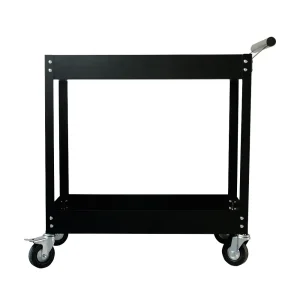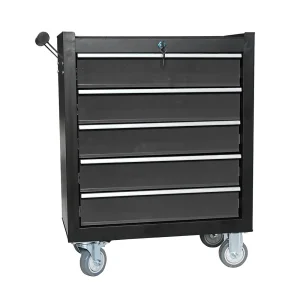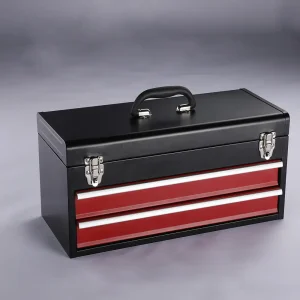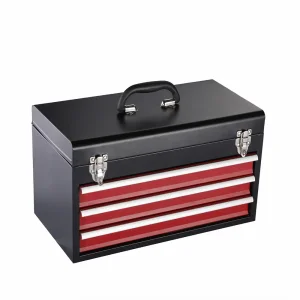
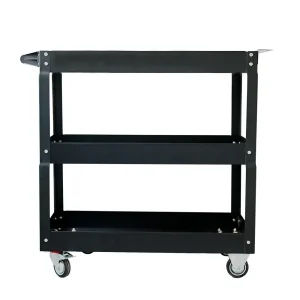
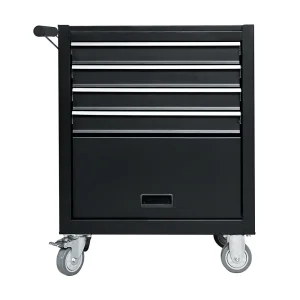
In high-precision manufacturing, pharmaceutical processing, aerospace MRO (Maintenance, Repair, and Overhaul), and marine engineering, mobile tool storage is no longer merely a passive utility—it is a critical productivity asset and safety containment system. As industries transition toward lean manufacturing, ISO-certified hygienic controls, and automated assembly environments, the global market for Stainless Steel Tool Carts is undergoing a massive structural transformation.
Driven by strict contamination control directives and volatile work environments, the global industrial stainless storage market is projected to expand at a CAGR of 6.8% through 2030. Key growth vectors include stringent FDA/HACCP regulations in food processing, ISO Class 3–5 semiconductor fab expansions, and anti-sparking safety protocols in hazardous chemical processing zones.
Traditional carbon steel toolboxes—even when powder-coated—are prone to micro-chipping, moisture entrapment, and eventual subsurface oxidation. In contrast, AISI 304 and AISI 316L stainless steel tool carts feature self-passivating chromium-oxide ($Cr_2O_3$) layers that deliver lifetime immunity against atmospheric corrosion, aggressive solvents, and washdown chemicals.
Modern enterprise buyers evaluate tool carts across five crucial vectors: Dynamic Load Ratings (N/mm²), Caster Rolling Resistance & Static Lock Integrity, ESD Discharge Grounding Pathways, Drawers Slide Fatigue Life (DIN EN 15338), and Anti-Tipping Safety Interlock Architecture.
Selecting the appropriate alloy grade dictates structural lifespan, chemical immunity, and compliance with global regulatory standards. Below is an engineering comparison matrix contrasting standard mild steel against high-grade austenitic stainless steel variants used in OEM custom manufacturing.
| Material Specification | Standard Carbon Steel | AISI 304 Stainless Steel | AISI 316L Stainless Steel |
|---|---|---|---|
| Alloy Composition | Fe + <0.3% C (Powder Coated) | 18% Cr, 8% Ni | 16% Cr, 10% Ni, 2% Mo |
| PREN Index (Pitting Resistance) | < 5 (Negligible) | 18.0 - 20.0 | 23.0 - 25.0 (High Resistance) |
| Salt Spray Resistance (ASTM B117) | 96 to 240 Hours (Vulnerable) | 1,000+ Hours without Rust | 2,500+ Hours (Marine Grade) |
| Chemical / Acid Immunity | Poor (Chipping leads to rust) | Resistant to organic acids/solvents | Immune to chlorides, bleach, H2SO4 |
| Cleanroom Class Rating | ISO Class 7-8 Only | ISO Class 4-5 Approved | ISO Class 1-3 Ultra-Cleanroom |
| Thermal Range & Toughness | -20°C to +120°C | -196°C to +800°C (Cryogenic safe) | -196°C to +870°C (High thermal shock) |
Raw stainless steel cutting and robotic welding can introduce microscopic free-iron contaminants onto cabinet surfaces. Premier manufacturers utilize Citric or Nitric Acid Passivation compliant with ASTM A967 to dissolve free iron and re-establish a uniform, self-healing Chromium Oxide layer. For high-purity biopharmaceutical and semiconductor applications, optional Electropolishing (EF) reduces surface roughness to micro-smooth levels ($R_a < 0.2\,\mu\text{m}$), preventing bacterial bio-film adhesion and particulate shedding.
An industrial stainless steel tool cart is subjected to severe mechanical stress in high-intensity workshops. Engineering structural integrity requires rigorous finite element analysis (FEA) to balance high drawer capacity with mobility safety.
Drawer slides are constructed from 304-grade cold-rolled stainless steel equipped with industrial ball bearings. Engineered for over 100,000 extension cycles under 45kg to 100kg dynamic load ratings per drawer, featuring soft-close hydraulic dampers to prevent heavy tools from slamming or dislodging layout grids.
To comply with OSHA and EN 1757-3 industrial mobility standards, heavy-duty rolling cabinets utilize an interlocking anti-tipping system. Opening one drawer automatically locks all remaining drawers, shifting the center of gravity downward and preventing dangerous tipping accidents during rapid movement.
Outfitted with 5-inch to 8-inch heavy-duty non-marking Polyurethane (PU) wheels mounted on 316-grade stainless steel swivel housings. Designed with dual total-lock foot brakes, shock-absorbing springs, and load bearing capacities of up to 1,500 kg static load capacity across four casters.
Stainless steel tool carts serve vastly different structural and environmental purposes depending on the deployed sector. Below are four macro-industry case studies detailing custom configurations.
Challenge: Strict FDA cGMP compliance requires equipment that withstands daily wiping with concentrated Isopropyl Alcohol (IPA), Hydrogen Peroxide Vapor (VHP), and bleach solutions without shedding particles or oxidizing.
Engineered Solution: Fully welded 316L stainless steel cart with electro-polished surfaces ($R_a < 0.2\,\mu\text{m}$), seamless continuous radiused welds (eliminating 90° dirt traps), autoclave-safe removable trays, and non-marking ESD casters.
Challenge: Constant exposure to salt spray, sea fog, high ambient humidity, and deck vibration leads to catastrophic rust and unintended drawer slippage on marine vessels.
Engineered Solution: Heavy-duty 316-grade stainless construction equipped with IP65 weather-sealed perimeter rubber gaskets, marine slam-latches on every drawer, anti-spill top rim containment lips, and 316-coated hardware fittings.
Challenge: Static electricity discharges (ESD) can instantly destroy ultra-sensitive microchips and printed circuit board assemblies (PCBA) during transport.
Engineered Solution: Stainless steel carts outfitted with ESD conductive grounding drag chains, conductive polyurethane casters ($10^6 - 10^9\,\Omega/\text{sq}$ surface resistivity), and static-dissipative rubber drawer foam linings complying with ANSI/ESD S20.20.
Challenge: Technicians manage heavy pneumatic tools, calibrated torque wrenches, and massive component kits requiring fast visual organization and Foreign Object Debris (FOD) protection.
Engineered Solution: High-capacity rolling cabinets featuring dual-tone laser-cut EVA foam shadow boards, heavy-duty bamboo or solid stainless steel worktop inserts, side pegboard utility panels, and central key/combination locking hubs.
The convergence of smart factory automation and digital inventory management has elevated stainless tool carts from static storage hardware into intelligent node systems connected to enterprise Resource Planning (ERP) networks.
Integrated Ultra-High Frequency (UHF) RFID antennas embedded within cabinet drawers automatically scan tagged tools in under 3 seconds. If a tool is unreturned at shift completion, the digital control panel triggers visual/audible alarms, delivering critical Foreign Object Debris (FOD) protection for aircraft engine assembly line compliance.
Replaces physical keys with multi-factor authentication modules—including fingerprint biometric readers, RFID employee ID badges, and digital PIN keypads. All access logs are instantly transmitted via Wi-Fi to facility management software, recording timestamps and technician identities.
Next-generation stainless tool cabinets are engineered with structural base receiver plates designed for seamless docking with Autonomous Guided Vehicles (AGVs) and Mobile Robots (AMRs), enabling autonomous tool dispatch across large-scale smart factories.
When procuring enterprise-grade tool storage, professional purchasing directors balance initial Capital Expenditure (CapEx) against long-term Operational Expenditure (OpEx). Investing in high-grade stainless steel eliminates premature degradation cycles.
While standard mild steel tool cabinets carry a lower initial purchase cost, their 3-to-5 year replacement cycle in corrosive or humid industrial settings leads to elevated lifetime costs due to rust, caster failures, and lost productivity. Stainless steel carts provide a 15+ year operational lifespan with zero repainting or corrosion downtime, effectively delivering a 40% net savings in overall Total Cost of Ownership.
Expert answers to fundamental engineering, material grade selection, custom OEM procurement, and maintenance questions for B2B buyers.
AISI 304 contains 18% Chromium and 8% Nickel, offering exceptional corrosion resistance for standard industrial, laboratory, and garage environments. AISI 316L contains an additional 2-3% Molybdenum and lower carbon content, providing superior protection against pitting in high-salinity marine environments, harsh chloride washdowns, and aggressive pharmaceutical sterilizing chemicals.
The mechanical interlock system uses a vertical internal lock rod connected to each drawer slide. When one drawer is pulled open, the system engages a safety latch that physically blocks all other drawers from extending simultaneously. This keeps the cabinet's center of gravity centered within the wheel footprint, preventing dangerous tipping hazards when loaded with heavy metal tools.
Yes. For ISO Class 5 (Class 100) cleanrooms, we supply custom 304/316 stainless steel tool carts featuring electropolished finishes ($R_a < 0.2\,\mu\text{m}$), continuous full-penetration welds without gaps, non-outgassing silicone drawer liners, and non-marking, ESD-rated solid polyurethane caster wheels that eliminate particle generation.
Our standard heavy-duty drawer ball-bearing slides support dynamic loads from 45kg to 100kg per drawer. For extreme industrial requirements, we manufacture custom reinforced double-slide drawers capable of supporting up to 150kg per drawer, with total trolley static load capacities exceeding 1,500kg.
We provide comprehensive OEM/ODM services including custom laser-cut logo plates, bespoke drawer height partitioning, integrated power strip outlets (USB/AC), laser-engraved tool foam inserts, customized RAL powder coatings, and specialized worktop surfaces (e.g., solid stainless steel, hardwood, ESD anti-static mats).
Clean surfaces regularly using warm water and a mild non-abrasive detergent or specialized stainless steel cleaner. Avoid steel wool or carbon-steel wire brushes that can embed free-iron particles into the surface. Periodic application of citric-acid passivating cleaners helps maintain the micro-thin Chromium Oxide ($Cr_2O_3$) barrier in harsh chemically reactive environments.