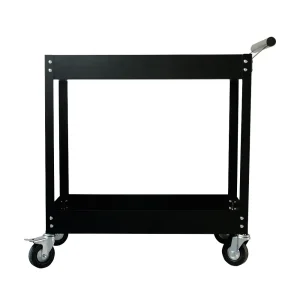
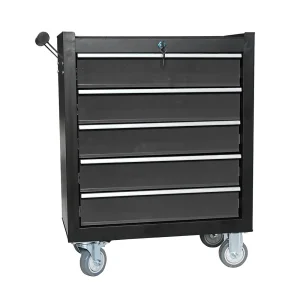
Engineered to support heavy machinery, chop saw cut-off stations, and complex mechanic tooling across high-demand industrial environments.
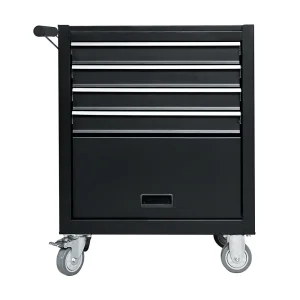
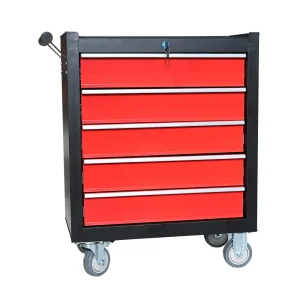
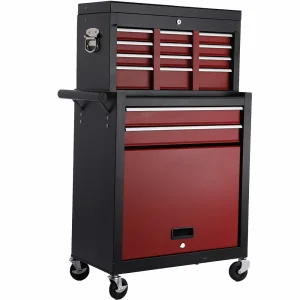
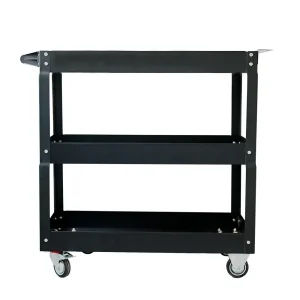
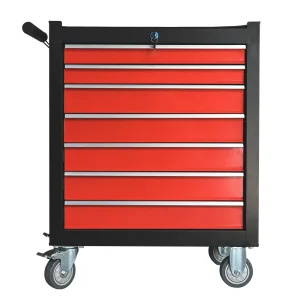
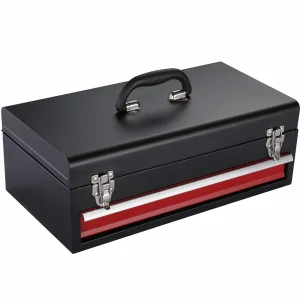
In modern structural steel fabrication, automotive rebuild facilities, and commercial construction sites, the demand for dedicated mobile cutting stations has fundamentally reshaped workshop ergonomics and workflow efficiency. Historically, abrasive cut-off machines and high-torque metal chop saws were mounted on static wooden benches or improvised steel frames. However, the operational challenges associated with dynamic rotational vibration, hot spark scattering, long stock metal feeding, and rapid job-site transition necessitated the creation of specialized industrial chop saw carts and heavy-duty rolling tool cabinets.
Leading global manufacturers have moved beyond basic cart frames to engineer modular, multi-functional rolling workstations. Modern chop saw carts incorporate heavy-gauge cold-rolled steel structures, integrated anti-vibration mounting plates, extendable material support arms, and dust/spark management deflectors. Furthermore, by pairing these robust cutting tables with multi-drawer interlocking tool cabinets, manufacturers provide a comprehensive storage unit that protects precision measuring devices, replacement abrasive discs, clamp systems, and handheld power tools within a single lockable unit.
When global procurement managers search for a famous chop saw cart manufacturer, their search intent extends far beyond finding a simple steel stand. They seek manufacturing partners capable of delivering engineered mobility solutions that withstand harsh industrial environments, reduce operator fatigue, strictly comply with International Safety Standards (such as CE and ANSI-BIFMA load certifications), and offer OEM customizability for private-label distribution.
To understand what differentiates elite chop saw cart manufacturers from low-tier fabricators, one must analyze the raw material selection, sheet metal processing, dynamic load distribution, and surface treatment technologies. Zhejiang Dingda Industrial Co., Ltd. and top-tier industrial OEM companies employ rigorous metallurgical standards to guarantee high torsional rigidity.
Utilizing premium SPCC cold-rolled steel sheet ranging from 1.2mm for cabinet side panels up to 2.0mm for load-bearing caster mounts and top mounting decks. This prevents frame flex under 14-inch metal cut-off saw operation.
Industrial chop saws generate intense high-frequency harmonics during metal cutting. Reinforced mounting platforms integrate elastomeric isolation bushings to absorb vibration, stabilizing saw cuts and reducing noise levels.
Integrated storage drawers feature 45mm full-extension dual ball-bearing slides with dynamic load capacities ranging from 45kg to 75kg per drawer. Soft-close and auto-latch mechanisms prevent accidental drawer opening during transit.
| Engineering Metric | Standard Commercial Cart | Heavy-Duty Industrial Saw Workstation (Dingda Standard) | Custom OEM Enterprise Solution |
|---|---|---|---|
| Steel Sheet Thickness | 0.7 mm – 0.9 mm Commercial Steel | 1.2 mm – 2.0 mm SPCC Cold-Rolled Steel | Up to 2.5 mm Heavy Structural Alloy |
| Static Load Capacity | 150 kg – 250 kg | 450 kg – 650 kg | 800 kg+ Custom Reinforced Frame |
| Caster Specification | 3-inch Polypropylene Casters | 5-inch TPR Heavy-Duty Swivel Casters with Dual Brakes | 6-inch Industrial Mold-On Rubber / PU Casters |
| Surface Coating | Single-Layer Paint Coating | 7-Stage Wash + Electrostatic Epoxy Powder Coating | Anti-Static ESD Coating / Outdoor UV Resistant |
| Drawer Interlocking Safety | Single Key Lock System | Anti-Tilt Single-Drawer Open Safety Mechanism | Digital Keypad / Central RFID Lock Integration |
| Vibration Damping | Direct Steel Plate Mounting | Embedded Elastomer Dampening Rubber Mounts | Isolated Sub-Frame Hydraulic Dampeners |
Industrial tool cabinets and chop saw carts operate in environments exposed to abrasive metal dust, oil, and humidity. Top manufacturers utilize a 7-stage chemical pretreatment process—including degreasing, zinc phosphating, and deionized water rinsing—followed by automated electrostatic epoxy-polyester powder coating. This results in a scratch-resistant finish exceeding 480 hours of ASTM B117 salt spray corrosion resistance testing, guaranteeing decades of reliable service on the shop floor.
The international supply chain for industrial metal tool cabinets, rolling toolboxes, and chop saw carts is heavily concentrated in China’s eastern manufacturing hubs—specifically Zhejiang Province. Zhejiang Dingda Industrial Co., Ltd. (located in Huzhen Town, Jinyun County, adjacent to Yongkang City) represents the epicenter of China’s hardware manufacturing prowess. This regional cluster offers unmatched competitive advantages for global enterprise buyers, hardware distributors, and OEM brand owners.
Zhejiang’s industrial hardware ecosystem houses cold-rolling steel mills, specialized caster factories, precision ball-bearing slide makers, and powder-coating chemical suppliers within a 30-mile radius. This tight geographic integration minimizes material transport latency, reduces intermediate logistics costs, and allows factories to scale production rapidly during peak seasonal demand.
Leading Chinese manufacturers have invested heavily in Industry 4.0 production technologies. Spanning over 40,000 square meters of modern facilities, factories employ 10,000W fiber laser cutting systems, CNC automatic bending centers, continuous robotic spot-welding arms, and automated powder-coating conveyor lines. This automation ensures millimeter-level precision across every drawer slot and frame joint.
Global buyers require tailored configurations to differentiate their product offerings. Chinese saw cart manufacturers excel at custom engineering—offering bespoke drawer height ratios, specialized chop saw mounting slot patterns, custom RAL powder-coating colors, laser-etched branding, and customized ISTA-certified export packaging designed to survive transoceanic shipping.
Through massive volume production and standardized modular tooling, Chinese manufacturers achieve production cost efficiencies unmatched in Western markets. This allows B2B buyers, tool importers, and retail chains to capture healthy gross profit margins while delivering commercial-grade steel equipment to end-users at competitive wholesale price points.
As smart factories, lean manufacturing protocols, and ergonomic workplace safety standards gain momentum worldwide, the humble tool cart and chop saw stand are undergoing a digital and mechanical transformation. Industry leaders are pioneering key innovations to meet the requirements of next-generation tradespeople and industrial engineers:
Modern saw carts now feature built-in heavy-duty power strip modules (with surge protection, USB-C fast charging, and GFCI outlets) to power chop saws and power tools directly. Advanced models integrate Bluetooth/RFID asset-tracking sensors inside drawer compartments to audit high-value tool locations in real time.
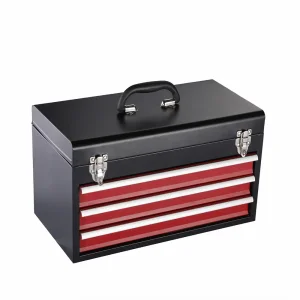
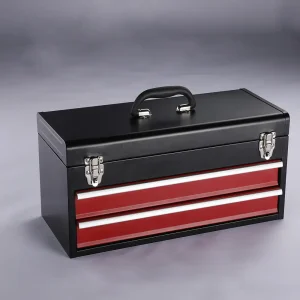
Driven by the need for job-site portability, saw carts are evolving into modular interlocking systems. Upper toolbox units lock onto lower heavy-duty rolling cabinets using quick-release latch mechanisms, allowing technicians to detach portable metal toolboxes for off-site tasks while keeping the primary saw cart stationed in the shop.
Occupational health and safety guidelines (OHSA) mandate stricter tip-over protections for loaded industrial cabinets. Advanced carts incorporate mechanical interlocking safety bars that restrict users to opening only one drawer at a time, ensuring the center of gravity remains firmly within the base footprint even when fully loaded.
Industrial chop saw carts and heavy-duty metal tool cabinets are deployed across diverse sectors, each presenting unique mechanical demands and environmental challenges. Understanding these localized application scenarios enables factory engineers to optimize cart designs for maximum utility.
Fabricators cutting heavy angle iron, square tubing, and rebar require mobile saw stations equipped with extendable stock support rollers. Industrial saw carts positioned in metal fabrication shops withstand high heat, metal spark streams, and heavy mechanical impacts. Integrated metal drawer dividers store replacement abrasive blades, deburring tools, and square gauges within arm’s reach of the saw operator.
Commercial auto garages and fleet maintenance depots rely on mobile 5-drawer and 7-drawer rolling tool cabinets. Mechanics utilize these mobile platforms to navigate tight vehicle bays, storing heavy impact sockets, pneumatic wrenches, and diagnostic tools securely under central lock systems while keeping upper work surfaces clear for assembly.
On construction job sites, mobility across uneven concrete slabs, gravel, and job-site debris is critical. Chop saw carts engineered with 5-inch or 6-inch shock-absorbing polyurethane casters allow contractors to transport cutting machinery directly to framing areas, drastically reducing downtime associated with walking stock metal back and forth.
In aerospace maintenance hangars, strict Foreign Object Debris (FOD) control protocols demand organized tool storage solutions. Modular interlocking metal tool cabinets with custom EVA foam inserts allow technicians to immediately spot missing tools, while heavy-duty lock mechanisms ensure compliance with strict safety audits.
Sourcing industrial chop saw carts and heavy-duty rolling tool cabinets at scale requires a structured supplier evaluation framework. Enterprise buyers must balance initial FOB unit prices with long-term durability, shipping volume efficiency, and factory quality management standards. Below is the strategic checklist recommended by senior SEO growth directors and industrial sourcing consultants:
Verify steel sheet gauge thickness using digital calipers during pre-shipment inspections. Ensure suppliers specify cold-rolled SPCC steel rather than weaker hot-rolled alternatives. Evaluate dynamic load testing reports for drawer slides (minimum 45kg dynamic load rating under 50,000 cycle test).
Heavy steel carts are susceptible to transit damage if packaged improperly. Demand 5-ply double-wall corrugated cartons, reinforced corner guards, VCI anti-rust polybags, and fumigation-free wooden palletizing. Request nested flat-pack KD (Knocked-Down) or semi-assembled design options to maximize container CBU/CKD cubic capacity.
Confirm that the manufacturing facility operates under ISO9001 Quality Management and ISO14001 Environmental Management Systems. Ensure products carry necessary market certifications (CE marking for European buyers, ANSI/BIFMA structural standards for North American commercial supply contracts).
Discover our full spectrum of CE and ISO-certified tool cabinets, utility rolling trolleys, and lockable cantilever metal toolboxes manufactured by Zhejiang Dingda.