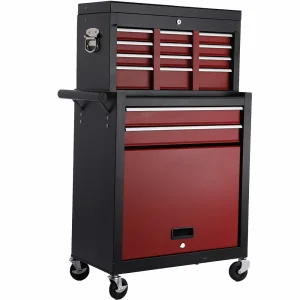
Heavy-duty engineering solutions built for high-density logistics, automotive MRO, and lean workshop operations.
Quantifiable quality control indicators verified through rigorous DEKRA laboratory stress and fatigue testing protocol.
An authoritative analysis of load-bearing dynamics, material science, and DEKRA structural certification standards in modern material handling equipment.
Modern industrial supply chains require uncompromising structural integrity, ergonomic movement optimization, and predictable long-term durability. As an established DEKRA Flat Wheeled Dolly Manufacturer & Factory, Zhejiang Dingda Industrial Co., Ltd. pioneers advanced sheet-metal fabrication, cold-rolled steel profiling, and high-performance caster integration to yield industrial flatbed dollies engineered for seamless automated and manual material transport.
The core structural frame of an industrial flat dolly determines its resistance to torsional deflection, impact fatigue, and yield failure under uneven point loading. Our factory utilizes high-tensile cold-rolled steel (SPCC grade) ranging from 1.2 mm up to 3.0 mm in heavy-duty chassis reinforcement gussets. Through Finite Element Analysis (FEA) dynamic modeling, stress distribution across the deck surface is optimized to eliminate localized deformation.
| Material Parameter | Standard Commercial Dolly | Dingda DEKRA-Grade Industrial Dolly | Operational Impact |
|---|---|---|---|
| Steel Deck Grade | Commercial Hot-Rolled Steel (1.0 mm) | Cold-Rolled SPCC Steel (1.5mm - 2.5mm) | +65% increase in yield strength & flexural rigidity |
| Chassis Structure | Single-Layer Pressed Rim | Interlocking Double-Folded Tubular Beam | Eliminates longitudinal twisting under heavy off-center loads |
| Caster Tread Compound | Standard Recycled PVC / Rubber | Vulcanized Polyurethane (92 Shore A) | Ultra-low rolling resistance, non-marking, chemical resistant |
| Bearing Assembly | Plain Stamped Sleeve Bearings | Dual Precision Ball Bearings with Dust Seals | Reduces starting push force by 40%, smooth 360° maneuverability |
| Surface Protection | Basic Spray Paint (20 µm) | Degreased Phosphated Powder Coat (70–90 µm) | Passes 48-Hour Salt-Spray Anti-Corrosion Audit (ASTM B117) |
As smart factories move toward fully autonomous internal logistics, the static flat dolly is evolving into a cyber-physical transport component. Our engineering technical roadmap focuses on four primary innovation pillars:
Different industrial environments impose distinct physical strains on flatbed transport platforms. Dingda’s specialized flat dolly architectures are deployed across key global sectors:
Combining vertically integrated raw material processing, automated robotic manufacturing, and global regulatory compliance.
From raw cold-rolled steel coils to high-speed CNC punching, robotic laser welding, and automated electrostatic powder coating, our 40,000 m² facility executes every phase in-house to guarantee consistent structural tolerance.
Every flat dolly series undergoes rigorous DEKRA-standard dynamic drop tests, static overload evaluations (up to 3x rated capacity), and wheel wear-resistance checks to ensure compliance with EN 12532 safety standards.
Rapid 3D CAD modeling, FEA load simulation, and rapid prototyping capabilities allow global buyers to obtain customized flatbed dimensions, specialized caster combinations, and private-label packaging in under 7 days.
A comprehensive framework designed for procurement heads, supply chain directors, and industrial distributors seeking risk-free factory partnerships.
When enterprise buyers evaluate flat wheeled dolly suppliers, total cost of ownership (TCO) outweighs initial purchase price. A failed caster or structural deck warp in an active manufacturing facility halts production and inflates warranty liabilities. As a premier DEKRA Flat Wheeled Dolly Manufacturer & Factory, we provide comprehensive compliance documentation, audit reports, and localized support mechanisms to ensure seamless international deployment.
In-depth responses regarding DEKRA compliance, load capacity verification, OEM manufacturing parameters, and export logistics.
DEKRA testing protocols evaluate mechanical safety under ISO 22883 and EN 12532 standards. This includes static overload testing at 1.5x to 3x nominal capacity, dynamic obstacle impact driving over 5 mm obstacles for tens of thousands of cycles, wheel brake holding power on 10° inclines, and tip-over resistance during sudden directional changes.
Polyurethane (PU) offers the optimal balance of ultra-high load capacity, floor protection, and resistance to workshop oils/chemicals. TPR is softer and ideal for ultra-silent operation in healthcare or office environments. Nylon delivers the lowest rolling resistance for maximum heavy loads on smooth, sealed concrete floors, though it produces slightly more rolling noise.
For standard catalogue flat dollies, our minimum order quantity starts at 100 units per model. For bespoke custom designs involving custom metal stamping dies, specialized RAL powder coat matching, or unique deck dimensions, the initial MOQ is typically 300 units to amortize setup and engineering costs efficiently.
Every sheet-metal component undergoes a 7-stage surface pretreatment process including automated chemical degreasing, acid rust removal, zinc phosphating, and deionized water rinsing. Subsequently, an electrostatic powder coating (60–80 µm thickness) is applied and cured at 200°C, providing superior scratch resistance and passing 48-hour neutral salt-spray testing (ASTM B117).
Initial prototype production and sample approval require 7 to 10 business days. Standard full-container mass production (20GP or 40HQ) is completed within 25 to 35 days post-approval. Orders are shipped primarily through Ningbo or Shanghai ports, supporting FOB, CIF, or DDP trade terms.
Explore our comprehensive lineup of OEM interlocking utility carts, portable tool cases, and heavy-duty workshop cabinets.