Precision-engineered cantilever metal boxes, heavy-duty rolling tool carts, and modular garage storage systems manufactured direct from our ISO-certified facilities.
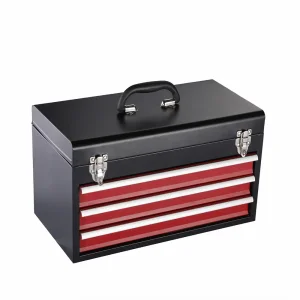
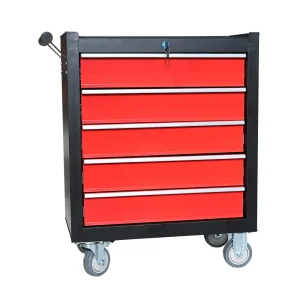

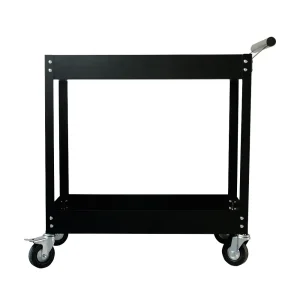
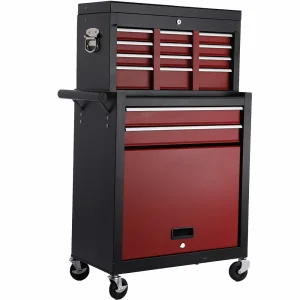
Analyzing how automated sheet metal processing, regional supply chain density, and modern lean manufacturing redefine the cost-to-quality ratio in global industrial hardware procurement.
In the global industrial storage market, the terminology "cheap tool chest factory" is frequently misunderstood by commercial procurement officers, OEM brand managers, and hardware wholesale buyers. In traditional retail terminology, "cheap" often implied compromised structural integrity, paper-thin gauge steel, erratic drawer slides, and poor powder-coat adhesion. However, in modern metallurgical manufacturing clusters—most notably within the Zhejiang industrial corridor of China—the economics of high-capacity metal tool storage have undergone a profound paradigm shift.
Information Gain Benchmark: True cost efficiency in heavy-duty tool chest manufacturing is not achieved by reducing material thickness, but by optimizing coil stamping utilization rates, deploying robotic fiber-laser welding cell clusters, and consolidating local hardware component supply chains within a 50-kilometer radius.
When enterprise buyers seek out a dedicated tool chest factory or evaluate international tool storage factories, the primary search intent revolves around securing high-density steel enclosures capable of supporting dynamic loading capacities (from 45kg to 120kg per drawer) while preserving low Unit FOB (Free on Board) purchase costs. Achieving a competitive price point without sacrificing ISO-compliant safety standards requires a deep understanding of cold-rolled steel (SPCC) grading, automated phosphate pre-treatment, and high-performance ball-bearing slide assembly lines.
Macroeconomic drivers, industrial expansion, and sector-specific demand patterns shaping the worldwide tool chest and trolley market.
With the average age of passenger and commercial vehicles reaching historic highs in North America and Western Europe, professional service centers require multi-drawer rolling tool cabinets with high dynamic load ratings to house heavy pneumatic impact wrenches, diagnostic tools, and specialty socket sets.
Manufacturing plants, wind turbine servicing facilities, and automated distribution centers are standardizing on heavy-duty metal tool trolleys. These units act as mobile workstations equipped with interlocking drawer systems that prevent tipping when traversing textured concrete factory floors.
The explosion of home workshop upgrades and professional tradesmen requiring compact, portable cantilever metal toolboxes has driven massive volume growth in retail hardware chains. Sourcing directly from high-volume factories provides retailers with 45-55% gross margins on standard box SKUs.
Inside the structural parameters that define professional-grade tool chests: Steel selection, CNC laser cutting, automated welding, and electrostatic powder coating.
To evaluate why one factory's production output outlasts another under rigorous jobsite conditions, buyers must inspect the underlying mechanical engineering matrix. A top-tier tool chest relies on four fundamental technical pillars:
High-tensile SPCC steel (0.8mm to 1.5mm gauge) provides structural rigidity, resisting frame distortion under maximum dynamic payload capacities.
Automated fiber-laser cutting and multi-axis CNC press brakes ensure dimensional tolerances within ±0.05mm for perfect drawer alignment.
Multi-stage degreasing and zinc phosphating pre-treatment followed by thermosetting epoxy-polyester powder coating guarantees 48-hour salt spray corrosion resistance.
Heavy-duty dual ball-bearing drawer slides equipped with auto-return detents ensure smooth extension even under full 45kg per drawer loading.
How smart integration, modularity, and advanced ergonomics are driving next-generation tool chest production.
Safety standards in North America and Europe increasingly mandate anti-tipping mechanics. Modern tool chest factories integrate internal latch bars allowing only one drawer to open at a time, eliminating tip-over hazards in heavy industrial zones.
Industrial 4.0 integration has introduced electronic keypad locks, bluetooth proximity unlocking, and internal shadow-foam RFID tag sensors that keep real-time inventory of high-value aerospace tools, reducing FOD (Foreign Object Debris) risks.
B2B buyers prefer versatile storage ecosystems. Upper tool chests with cantilever drop-down handles, matching roller cabinets, and quick-connect side shelves allow users to expand storage footprint as workshop demands scale.
How custom-configured metal tool storage solves operational bottlenecks across diverse global working environments.
5-drawer to 7-drawer heavy-duty mobile trolleys equipped with 5-inch TPR swivel casters allow mechanics to transport full wrench, socket, and diagnostic instrument sets directly to the vehicle lift station.
Lockable cantilever toolboxes and high-security multi-drawer cabinets with foam-inlay organization systems provide complete tool accountability required by civil aviation maintenance regulations.
Reinforced steel worktops integrated onto rolling tool cabinets allow technicians to mount bench vises, perform light metal fabrication, and store heavy cutting tools right on the shop floor.
Flat-packed, knocked-down (KD) tool cabinet designs engineered by specialized factories maximize ocean freight container utilization, reducing shipping landed costs by up to 35%.
Essential parameters for international buyers auditing tool chest factories in China and Southeast Asia.
When auditing a prospective tool chest factory, overseas procurement managers should look past surface-level price quotes and evaluate the manufacturer's total operational capability across these five critical audit criteria:
Demand mill test certificates verifying SPCC cold-rolled steel grade compliance. Ensure drawer walls maintain a minimum thickness of 0.7mm to 0.8mm, with outer frame uprights reaching 1.2mm to 1.5mm.
Confirm the factory utilizes automated multi-stage washing and phosphating tanks before powder spraying. Un-treated steel corrodes quickly under humid garage conditions, leading to paint flaking.
Verify that drawer slides undergo minimum 50,000-cycle dynamic load opening/closing tests, and casters pass 10km uneven terrain rolling tests under maximum rated capacity.
Empowering global brands, distributors, and industrial clients with heavy-duty metal tool storage solutions since 2005.
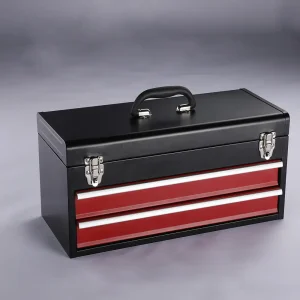
Established in 2005 (formerly Yongkang Dingda Industry & Trade Co., Ltd.), Zhejiang Dingda Industrial Co., Ltd. spans a modern 40,000 m² manufacturing facility located in Huzhen Town, Jinyun County, Zhejiang Province, China. As a specialized manufacturer of metal tool storage systems, our portfolio encompasses multi-tier cantilever toolboxes, rolling tool cabinet trolleys, modular garage storage units, and custom heavy-duty workbenches.
Driven by our core corporate philosophy—"Quality is the first life of an enterprise"—Dingda integrates automated CNC sheet metal stamping, precision robotic welding lines, and environmental powder coating systems under strict ISO 9001 quality management standard protocols. With over two decades of international OEM/ODM export experience, we partner with major hardware brands, commercial distributors, and industrial suppliers across 40+ countries.
Detailed answers to common technical, sourcing, and customization queries from global B2B buyers.
A cost-optimized tool chest factory achieves competitive pricing through economies of scale, high-speed automated laser cutting, robotic welding cells, and lean raw sheet metal coil purchasing. Lower unit costs stem from manufacturing efficiency, zero material waste, and regional supply chain integration—not from using inferior thin steel or low-grade hardware.
For professional automotive and industrial work environments, drawer panels should use 0.7mm to 0.8mm SPCC cold-rolled steel, while main outer frames and load-bearing caster support plates require 1.2mm to 1.5mm steel reinforcement to withstand heavy daily payloads.
Yes. Zhejiang Dingda Industrial provides complete OEM/ODM manufacturing. We customize drawer layouts, overall cabinet dimensions, RAL powder coating colors, laser-engraved brand logos, custom foam inserts, and export-compliant retail packaging tailored to client specifications.
Heavy-duty ball-bearing slides with automatic detent latches or soft-close mechanisms are the industrial standard. Dual-set slides on deep bottom drawers can increase weight capacities up to 90kg - 100kg per drawer, preventing slide binding under maximum loading.
All metal components undergo a multi-stage pre-treatment process including alkaline degreasing, acid derusting, water rinsing, and phosphate passivation. High-voltage electrostatic powder coating is then applied and baked at 200°C, providing a chip-resistant, anti-corrosive finish that passes 48+ hour salt spray test standards.
Standard factory MOQ for custom OEM tool chests generally ranges from 50 to 100 units per model depending on color and size specifications. Sample preparation takes 7–12 days, while full container production orders are typically completed within 30 to 40 days upon deposit confirmation.
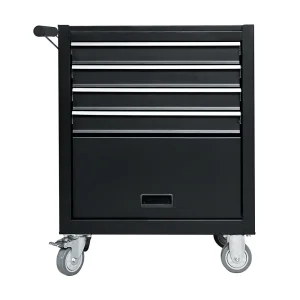
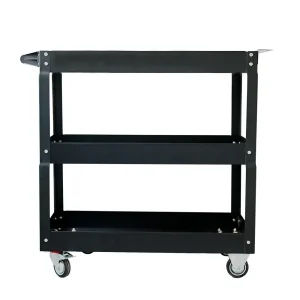
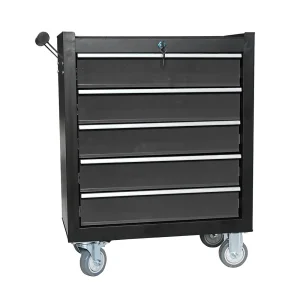
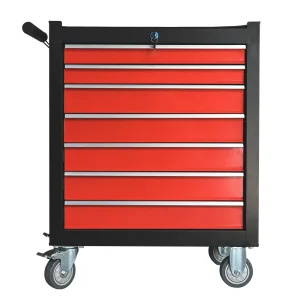
Browse our extended factory series engineered for garage storage, warehouse operations, and mobile mechanics.
Contact Zhejiang Dingda Industrial today for technical drawings, factory-direct FOB price lists, sample evaluations, and OEM customization quotes.