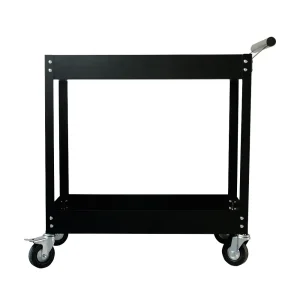
Direct from ISO-certified manufacturing facilities. Explore our robust hand truck and tool trolley selection engineered for global export standards.
Understanding European Machinery Directives, Load Dynamics, and Safety Compliance in Industrial Hand Truck Component Sourcing.
CE marking on industrial wheels verifies compliance with rigorous health and safety directives across the European Economic Area. Sack truck wheels must withstand non-destructive dynamic stress tests without catastrophic hub or tread shear.
Harmonized European standards govern castor and wheel performance for manual handling equipment. These standards establish baseline parameters for rolling resistance, obstacle impact resistance, and continuous duty cycles under maximum payload capacities.
Polyurethane and rubber compounds used in premium sack truck wheels undergo strict REACH SVHC and Polycyclic Aromatic Hydrocarbons (PAHs) testing, ensuring compliance with indoor environmental and worker safety standards across Northern Europe.
Unmatched industrial clustering, vertical raw material integration, and robotic manufacturing efficiency power world-class OEM/ODM production.
The concentration of precision hardware manufacturing, steel tube rolling, polymer synthesis, and vulcanization facilities in Eastern China creates an unmatched cost-to-performance ratio. Factories in this hub can rapidly source high-grade Q235 structural steel for rims, high-density polyurethane (PU) formulations, and precision ball bearings within a 50-kilometer radius.
This geographic density drastically reduces lead times for raw materials and enables flexible production runs—whether for standard 10-inch pneumatic sack truck wheels, puncture-proof solid foam wheels, or heavy-duty cast iron core industrial casters.
Modern Chinese wheel manufacturers have transitioned from manual labor to automated robotic injection molding and high-pressure vulcanization presses. Automated polymer dosing ensures uniform density throughout the wheel tread, preventing flat-spotting and premature delamination under heavy static loads.
Furthermore, digitalized quality control systems perform automated concentricity checking, wheel balance verification, and durometer hardness testing on every batch prior to export shipping.
How ergonomics, green polymer formulations, and microcellular polyurethane technology are driving the next generation of sack truck wheels.
Eliminating flat tire downtime in construction and warehouse environments. Microcellular foam encapsulates millions of closed air pockets, providing pneumatic-like shock absorption without air maintenance.
Innovations in tread geometry and high-rebound polyurethane matrices reduce pushing force requirements by up to 35%, significantly mitigating musculoskeletal injuries in warehouse workers.
For electronics manufacturing, cleanrooms, and chemical processing facilities, conductive and anti-static wheel compounds prevent electrostatic discharge sparks, protecting sensitive cargo.
Leading suppliers are incorporating bio-based polyols and post-industrial recycled rubber into hub assemblies, aligning with European corporate sustainability ESG mandates.
Selecting the optimal wheel specification based on operational environment, load requirements, and total cost of ownership (TCO).
| Wheel Technology | Load Capacity (kg) | Terrain Adaptability | Maintenance Profile | Shock Absorption | CE Certification Priority |
|---|---|---|---|---|---|
| Pneumatic Air Rubber | 150 - 350 kg | Exceptional (Gravel, Dirt, Turf) | Moderate (Air pressure maintenance) | Superior (10/10) | EN 12530 Impact Resistance |
| Microcellular PU Foam | 200 - 450 kg | High (Debris, Concrete, Nails) | Zero Maintenance (Puncture-proof) | High (8.5/10) | REACH Toxicity & EN 12532 |
| Solid Elastic Rubber | 300 - 600 kg | Moderate (Smooth/Industrial Floors) | Low (High tread longevity) | Moderate (6/10) | Heavy Load Dynamic Endurance |
| Thermoplastic Rubber (TPR) | 100 - 250 kg | High (Indoor Commercial / Retail) | Zero Maintenance (Non-marking) | High (8/10) | Non-Marking & Quiet Roll Standards |
How professional purchasing teams audit suppliers, verify certification validity, and minimize total logistics lifecycle costs.
Enterprise buyers must audit potential suppliers for ISO 9001:2015 Quality Management Systems. Verify that production lines utilize standardized torque calibration on axle mounts and automated wheel concentricity checks.
Ensure that CE test certificates are issued by accredited EU Notified Bodies. Authenticate the underlying test reports for dynamic fatigue loading, rolling resistance coefficient, and chemical compliance (REACH).
While low-grade rubber wheels reduce initial unit price by 15%, high-grade PU foam wheels reduce maintenance calls, tire replacement labor, and cargo damage claims, lowering total cost of ownership by up to 40% over 3 years.
Engineered to perform in demanding commercial, industrial, and specialized logistics environments.
Navigating curb jumps, broken pavements, and building stairs requires high-rebound pneumatic or microcellular PU wheels with sealed double-precision ball bearings to prevent dust ingress and axle lockup.
Transporting concrete blocks, mortar bags, and heavy equipment across sharp gravel, rebar scraps, and muddy terrain demands puncture-proof solid foam wheels mounted on reinforced steel rims with corrosion-resistant powder coating.
Sub-zero logistics centers require specialized low-temperature synthetic lubricants and non-brittle polyolefin wheel cores that maintain impact toughness at temperatures down to -30°C without cracking.
Technical guidance from leading wheel engineers and global export supply chain specialists.
CE certification for sack truck wheels typically references harmonized standards such as EN 12530 (castors and wheels for manual equipment). Testing includes static load testing (at 1.5x to 2x rated capacity), dynamic load fatigue testing (rolling over obstacle tracks at specified speeds for thousands of revolutions), rim impact resistance testing, and chemical compliance testing under REACH and RoHS to ensure no toxic plasticizers or PAHs are present.
Microcellular PU foam wheels provide 100% puncture-proof reliability, completely eliminating flat tires, air pressure checks, and downtime in industrial environments. While pneumatic air wheels offer slightly higher vibration damping over extremely harsh terrain, microcellular PU mimics the elasticity of air tires while offering superior load capacity, higher wear resistance, and zero air maintenance costs.
For heavy industrial applications (>250kg payload), double-sealed precision ball bearings (e.g., 6204-2RS) are recommended. They provide minimal rolling resistance, protect internal steel balls from dust, sand, and moisture, and resist axial thrust during tight turning maneuvers. Needle roller bearings are suitable for medium-duty applications, while plain sleeve bearings are reserved for low-cost, light-duty utility carts.
Leading Chinese OEM manufacturers offer comprehensive customization including custom RAL color powder-coating on steel rims, molded logo embossing on plastic hubs and rubber sidewalls, customized bore diameters (e.g., 16mm, 20mm, 25.4mm / 1-inch), axle hub length adjustments, and retail-ready barcode packaging or bulk export palletization.
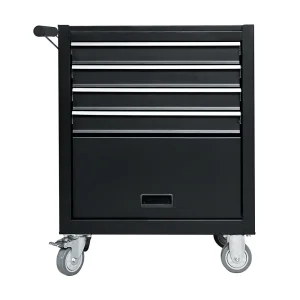
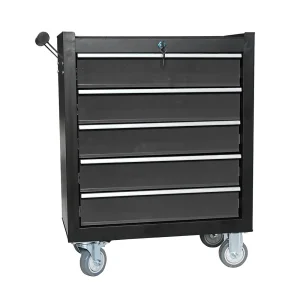
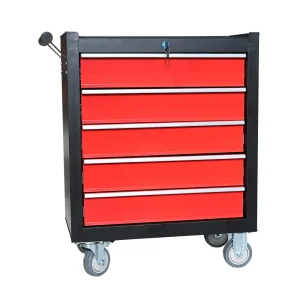
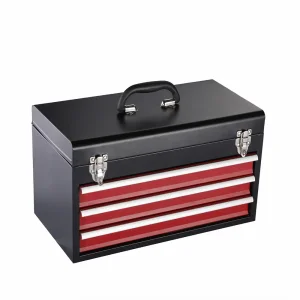
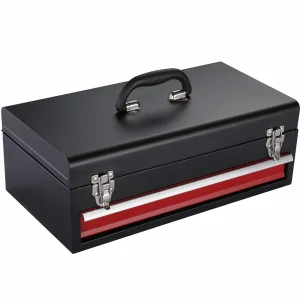
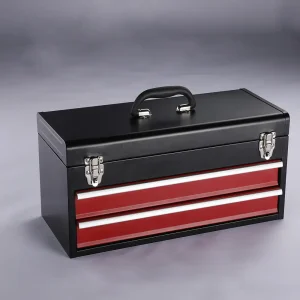
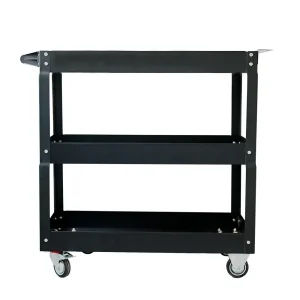
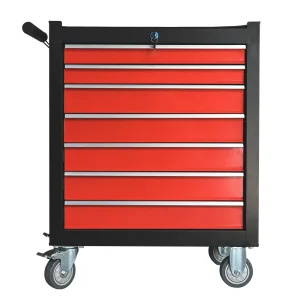
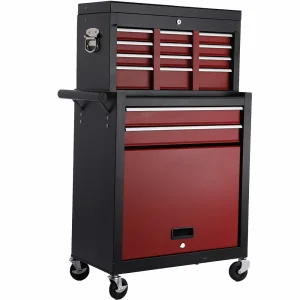
Premium OEM metal storage, rolling tool chests, and multi-drawer mechanics cabinets manufactured for international distributors.