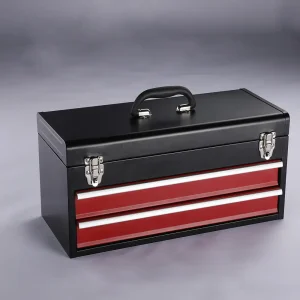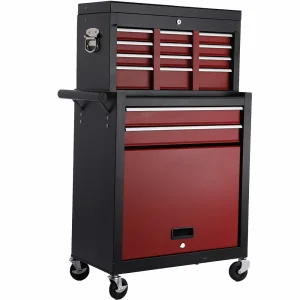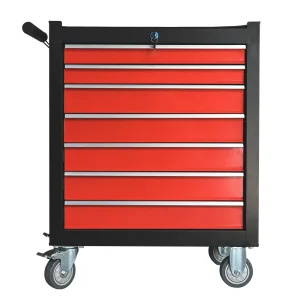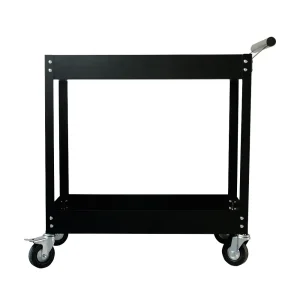
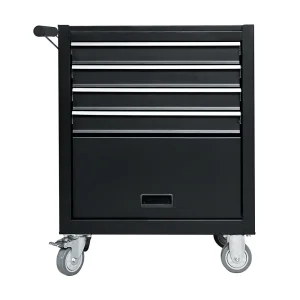
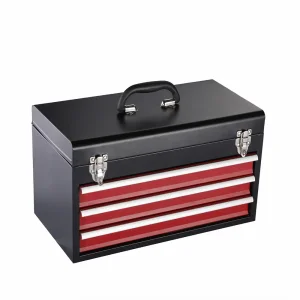
In high-intensity industrial, automotive OEM, and defense maintenance facilities, tool storage hardware is not merely furniture—it is critical infrastructure. Selecting the right Buy Rolling Chest Toolbox Supplier requires a granular understanding of metallurgical specifications, load deflection mechanics, dynamic caster fatigue ratings, and safety interlocking systems.
The structural longevity of an industrial rolling chest toolbox depends heavily on raw material selection. Leading Chinese original equipment manufacturers (OEMs) such as Zhejiang Dingda Industrial Co., Ltd. utilize heavy-gauge SPCC (Steel Plate Cold Commercial) steel compliant with JIS G3141 standards. Cold-rolled steel undergoes mechanical reduction at room temperature, imparting uniform grain orientation, high tensile yield strength (exceeding 270 MPa), and superior surface flatness compared to hot-rolled alternatives.
For heavy-duty B2B applications, cabinet frame thickness ranges between 1.0mm and 1.5mm, while reinforced double-wall drawer structures maintain a minimum gauge of 0.8mm to 1.0mm. Double-wall steel construction serves a vital dual purpose: it prevents exterior impacts from jamming interior drawer slides and increases structural rigidity against torsion during full-load mobility over concrete floor expansion joints.
Drawer mechanics represent the single most common failure point in low-grade commercial tool chests. Professional-grade rolling chests feature heavy-duty, full-extension ball-bearing slides engineered from hardened cold-rolled steel. Dynamic loading benchmarks require:
Corrosion resistance is crucial for tool cabinets operating in humid coastal dockyards, automotive wash bays, and chemical processing facilities. Modern Chinese manufacturing lines apply epoxy-polyester electrostatic powder coatings through multi-stage automated pre-treatment lines. The process includes degreasing, zinc phosphate conversion coating, ultra-pure water rinsing, and high-temperature curing at 180°C to 200°C.
| Test Parameter | Standard Commercial Specification | Dingda Industrial B2B Benchmark |
|---|---|---|
| Salt Spray Corrosion Resistance | 120 - 240 Hours (Basic Powder Coating) | 500+ Hours (ASTM B117 Standard) |
| Cross-Hatch Adhesion Test | Class 2B - 3B | Class 4B - 5B (ISO 2409 / ASTM D3359) |
| Pencil Hardness Coating Rating | H - 2H | 3H - 4H Scratch Resistant Surface |
| Chemical Resistance | Degrades upon motor oil exposure | Resistant to Brake Fluid, Hydraulic Oils & Solvents |
Utilizing fiber laser cutting machines (3000W - 6000W), multi-axis CNC turret punch presses, and robotic spot-welding arms guarantees dimensional tolerance within ±0.05mm across mass production batches.
From custom RAL color matching (wrinkle finish, gloss, matte) to customized drawer divider layouts, laser-etched brand logos, and integrated power strip modules (110V-240V AC + USB-C PD).
Direct factory sourcing eliminates intermediary markups. Co-located raw steel supply, in-house caster molding, and automated powder coating lines reduce lead times to 25-35 days for FCL orders.
Workplace safety standards in North America (OSHA compliance) and Europe (CE / DIN standards) mandate strict stability rules for mobile equipment. High-end rolling chest toolboxes incorporate an Anti-Tilt Interlocking Mechanism. This mechanical linkage allows only one drawer to be opened at a time. When a single drawer is extended, internal vertical locking bars block the remaining drawers from opening, shifting the center of gravity backward and eliminating tipping risks during heavy tool access.
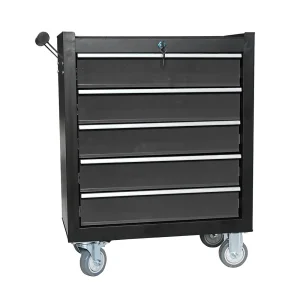
Central locking systems utilize high-security tubular key locks or digital combination electronic latches that engage a heavy-gauge internal steel locking bar, securing all drawers simultaneously with a single turn.
Regulatory Focus: ANSI/BIFMA X5.9 Storage Units Standard, California Proposition 65 (Lead/Phthalates compliance for PVC handles & drawer liners), OSHA Workplace Safety.
Freight Logistics: Palletized flat-pack or fully assembled unit packaging tested against ISTA 3A transit drop/vibration protocols to prevent ocean transport deformation.
Regulatory Focus: CE Certification, REACH Regulation (EC 1907/2006) for chemical safety in plastic components, RoHS compliance for power-integrated tool cabinets.
Customs HS Code: 9403.20.00 (Other Metal Furniture) for standardized duty rate determination across EU ports.
Regulatory Focus: AS/NZS heavy machinery storage guidelines, extreme thermal stability testing for powder coatings operated in high ambient temperature environments (>50°C).
Protection: Heavy-duty VCI (Vapor Corrosion Inhibitor) poly-bagging inside crate packaging to counter marine humidity during long transit cycles.
Integration of RFID scanner mats within individual drawers, enabling real-time tool tracking. Aircraft technicians and precision assembly lines utilize automated inventory systems to log tool check-outs and prevent Foreign Object Debris (FOD) risk.
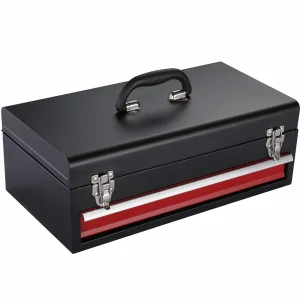
Cross-compatible design matrix where top cantilever chests, middle utility drawers, and bottom heavy-duty roller cabinets snap together via quick-release latching channels, catering to both stationary and mobile workforces.
Transitioning toward zero-VOC powder formulations, closed-loop water recovery systems, and recyclable steel alloys to meet international ESG (Environmental, Social, and Governance) procurement requirements.
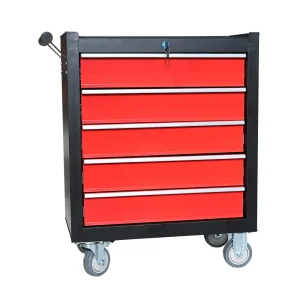
Requires 5-drawer to 7-drawer rolling carts equipped with chemical-resistant stainless steel or solid wood worktops. Mechanics benefit from 5-inch heavy-duty Polyurethane (PU) swivel casters with foot brakes for smooth navigation over epoxy workshop floors.
Demands high-load capacity cabinets (1000 kg total static rating). Reinforced double-wall steel frames, deep bottom drawers for pneumatic impact guns, and side pegboards for rapid hand tool access.
High mobility requirement. Lightweight aluminum alloy handles, custom foam cutout drawer inserts (EVA foam density 45 kg/m³) for instant tool visual verification, and non-marking rubber casters.