China Best Mechanical Toolbox Suppliers for Global Buyers

Time:2026-10-27 Author:Mason
0%

Choosing reliable China Mechanical Toolbox suppliers requires more than comparing prices on a product page. Global buyers need clear specifications, consistent quality, and evidence of responsible manufacturing. A practical toolbox should survive workshop pressure, repeated drawer use, and long-distance transportation. Its steel thickness, coating quality, wheel strength, and locking system all deserve careful review. Small details matter.

Real sourcing experience often reveals the difference. A supplier may provide attractive samples but deliver uneven production batches. That risk should not be ignored. Buyers should request factory photographs, inspection records, material details, and recent export references. Third-party audits can add confidence, although they cannot replace professional judgment. Ask about load capacity, drawer slides, corrosion resistance, packaging, spare parts, and warranty procedures. A serious supplier answers clearly and documents important claims.

Communication also affects the final result. Technical drawings, approved samples, and written tolerances can prevent costly misunderstandings. Suppliers serving international customers should understand export packaging, labeling, delivery schedules, and destination requirements. However, no supplier is perfect. Delays, color differences, or minor assembly issues may still occur. Strong companies respond quickly and correct problems transparently.

This guide examines China’s leading Mechanical Toolbox suppliers for global buyers. It focuses on manufacturing capability, product reliability, customization, quality control, and service performance. The goal is not to promote the cheapest option. It is to help buyers select a dependable partner for workshops, maintenance teams, distributors, and industrial users. Careful verification remains essential. That is where confidence begins.
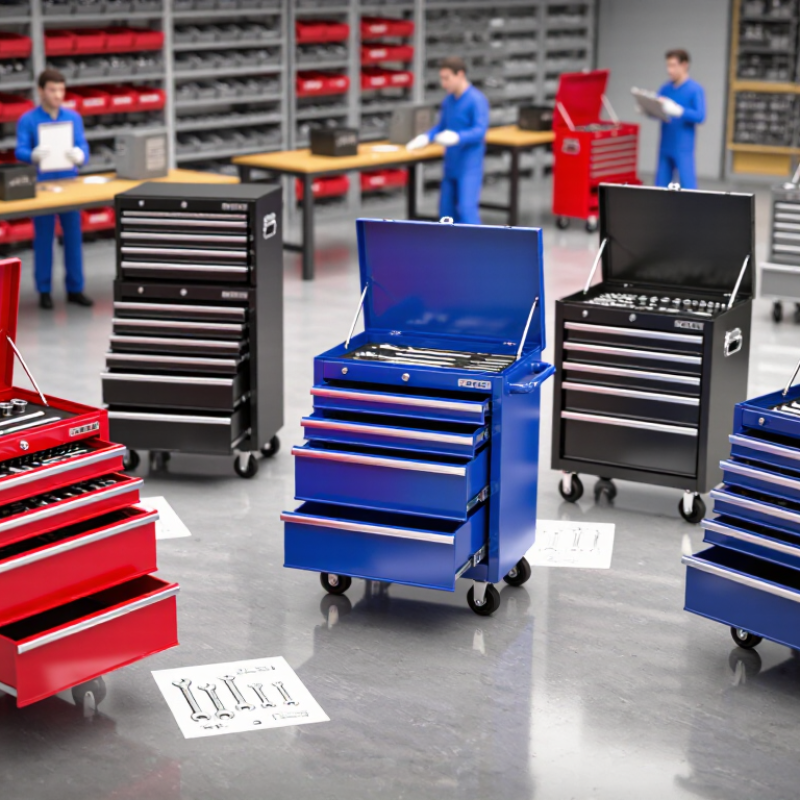
China Best Mechanical Toolbox Suppliers for Global Buyers

What Defines a Reliable Mechanical Toolbox Supplier in China

A reliable mechanical toolbox supplier in China should prove capability through details, not polished promises. Experienced buyers should request factory photos, production records, and recent inspection reports. The supplier must explain steel thickness, drawer load limits, coating methods, and locking performance clearly. Vague specifications create problems later. Small details matter.

Professional suppliers usually provide samples before large orders. A sample allows buyers to check drawer alignment, wheel movement, weld quality, and handle comfort. During one inspection, a drawer may feel smooth but reveal uneven gaps under heavier loads. This is why practical testing matters. Suppliers should accept reasonable feedback and correct defects with documented actions. They should also offer stable packaging, clear labeling, and traceable batch information.

Communication shows reliability over time. A dependable supplier answers technical questions directly and reports production delays early. They should understand container loading, moisture protection, replacement parts, and export documentation. However, no supplier is perfect. A factory may have strong metalworking skills but limited design support. Another may offer fast production but weaker final inspection. Buyers should compare these weaknesses honestly, instead of trusting the lowest quotation. A clear quality agreement, agreed sample, and scheduled inspection reduce uncertainty. Suppliers willing to discuss limitations often deserve closer attention.

Key Types of Mechanical Toolboxes Available for Global Buyers

Mechanical toolboxes come in several forms, and each suits a different working environment. Portable cantilever boxes are useful for technicians moving between job sites. Their layered trays keep sockets, pliers, and measuring tools visible. Rolling drawer cabinets offer greater capacity for workshops. Ball-bearing slides, reinforced corners, and locking casters improve daily reliability. However, large cabinets can become difficult to transport across uneven floors.

Modular toolboxes provide another practical option. Buyers can combine a base cabinet, removable cases, and specialized drawers. This design supports changing maintenance tasks without replacing the entire system. Steel models usually handle heavy tools and workshop impact well. Aluminum versions reduce weight and resist surface corrosion. Plastic cases are easier to carry, but hinges and latches need close inspection. A small weakness there can become expensive.

Tips: Match box size with the actual tool list. Check drawer load ratings, handle strength, wheel diameter, and internal dimensions. For international purchasing, confirm packaging protection and spare-part availability. Ask for material details and test records when possible. Do not judge quality by appearance alone. A polished surface may hide thin panels or poor alignment. The best choice is not always the largest one. Sometimes, buyers overestimate future tool storage and sacrifice mobility for unused space.

How to Evaluate Chinese Toolbox Manufacturers and Product Quality

How to Evaluate Chinese Toolbox Manufacturers and Product Quality

Evaluating a Chinese mechanical toolbox manufacturer requires more than comparing catalog prices. A polished website proves little. Ask for the factory address, production photos, and a live video inspection. Check whether cutting, welding, coating, and final assembly follow controlled procedures. Request recent quality records, not prepared marketing samples. Factory experience matters when steel thickness, drawer alignment, and lock durability must remain consistent.

Order a production sample before discussing large quantities. Measure panel thickness with a caliper. Inspect welds around handles, hinges, and drawer rails. Test each drawer with the stated load for several days. Test it hard. Open and close the drawers repeatedly, then check for bending or unusual noise. Examine powder coating under bright light for bubbles, thin areas, and exposed metal. Confirm dimensions, wheel material, packaging layers, and included hardware against the approved specification.

Reliable suppliers explain defects clearly and document corrective actions. Ask how workers identify damaged parts before packing. Review inspection reports and request random checks during production. Independent testing can verify load capacity, coating performance, and material claims. Communication quality is also evidence. Slow replies may not always indicate poor manufacturing, but vague answers deserve attention. No supplier is flawless. I would not reject a factory over one cosmetic scratch, yet repeated drawer misalignment shows weak process control. Keep written approvals, photographs, and tolerance requirements. Small details often decide whether a toolbox survives a busy workshop.

Export Standards, Customization, Pricing, and Order Requirements

China Best Mechanical Toolbox Suppliers for Global Buyers

Reliable export sourcing starts with verifiable production details. A qualified supplier should provide material specifications, load-test records, carton dimensions, and product photos before shipment. Check steel thickness, drawer capacity, wheel durability, and surface coating carefully. Details matter. Export documents should match the cargo, including the commercial invoice, packing list, certificate of origin, and correct HS classification. Buyers should also confirm destination-market requirements, such as labeling, packaging safety, and chemical restrictions. These rules can differ by country.

Customization is practical when drawings are clear. Buyers can request drawer layouts, colors, foam inserts, caster sizes, locking systems, and protective packaging. Send a sample or technical drawing before mass production. Small changes can affect tooling, production time, and inspection costs. Pricing usually depends on steel grade, thickness, surface treatment, quantity, packaging, and delivery terms. Compare complete quotations, not only unit prices. A low offer may exclude inland transport, export handling, or quality inspection. That gap matters.

Order requirements should state MOQ, lead time, payment stages, inspection standards, warranty handling, and acceptable defect limits. Pre-shipment inspection can check dimensions, weld quality, drawer movement, coating adhesion, and carton strength. Keep written approval records for every revision. In practical sourcing, one weakness often appears late: buyers approve appearance but overlook loading performance. That mistake is avoidable. A dependable supplier should answer technical questions directly and provide consistent evidence, even when the answer is inconvenient.

China Best Mechanical Toolbox Suppliers for Global Buyers - Export Standards, Customization, Pricing, and Order Requirements
Toolbox Category Typical Construction Common Sizes Typical Empty Weight Export Standards and Tests Customization Options Indicative FOB Price Range Typical MOQ Estimated Production Lead Time Packaging and Order Requirements
Portable Steel Toolbox Cold-rolled steel body, powder-coated finish, metal handle, internal removable tray, latch closure. 16–22 in; approximately 400–560 mm wide 2.5–6.5 kg ISO 9001 production control Salt-spray testing available Load and drop testing Color, logo printing, tray layout, latch type, foam inserts, barcode labels, carton artwork. US$8–28 per unit 100–500 units 25–40 days after approved sample and deposit Individual carton or master carton; export carton commonly uses corrugated board. Confirm carton dimensions, stacking limits, and shipping marks before production.
Heavy-Duty Steel Tool Chest Reinforced steel panels, multiple drawers, ball-bearing or friction slides, central lock, protective corner structure. 26–42 in; approximately 660–1,070 mm wide 25–75 kg Load-capacity verification Drawer-cycle testing Surface-coating inspection Drawer count, drawer liners, wheel configuration, handle design, color, lock system, private-label packaging. US$85–320 per unit 50–200 units 35–55 days after technical confirmation Usually packed in a reinforced carton with foam or molded corner protection. Palletization is recommended for larger quantities and container shipment.
Rolling Tool Cabinet Welded steel cabinet, four or more casters, locking drawers, push handle, anti-tip drawer configuration. 26–52 in; approximately 660–1,320 mm wide 45–125 kg Static-load testing Caster durability testing Drawer anti-tip inspection Number of drawers, caster diameter, drawer load rating, surface color, lock cylinders, tool-module compatibility. US$180–650 per unit 30–100 units 40–65 days after sample approval Requires reinforced export packaging, moisture protection, and secure caster or drawer fixation. Confirm container loading method because of high unit weight.
Aluminum Tool Case Aluminum sheet shell, aluminum frame, reinforced corners, foam or EVA interior, combination or key locks. 12–24 in; approximately 300–610 mm wide 1.2–4.5 kg Handle and hinge testing Drop testing Interior fit inspection Foam cutting, EVA color, dividers, lock style, handle, silk-screen logo, laser marking, custom insert. US$12–55 per unit 100–500 units 25–45 days after insert drawing approval Use protective film and corner protection to reduce surface scratches. Custom foam requires a confirmed tool layout or CAD drawing.
Stainless Steel Toolbox Stainless steel sheet construction, brushed or polished finish, corrosion-resistant hardware, removable tray. 16–24 in; approximately 400–610 mm wide 3–8 kg Material-grade verification Corrosion inspection Weld-quality inspection Steel grade, surface finish, thickness, internal compartments, lock, handle, engraving, packaging configuration. US$25–95 per unit 100–300 units 30–50 days after material confirmation Separate units with protective film or foam sleeves. Buyers should specify whether the product requires food-contact, marine, or general industrial use.
Modular Tool Storage System Interlocking plastic or steel modules, detachable organizers, wheeled base, carrying handle, stackable structure. Compact modules to 24 in; approximately 300–610 mm wide 4–25 kg per module Interlock strength testing Wheel and handle testing Drop testing Module combination, internal bins, color, labels, logo, lock points, foam, retail packaging, instruction manual. US$20–160 per set 200–1,000 sets 35–60 days after packaging approval Each module should be protected against abrasion and movement during transit. Confirm whether the MOQ applies to complete sets or individual modules.
Custom Industrial Tool Trolley Heavy-gauge steel frame, lockable drawers, industrial casters, worktop, side panels, optional electrical or pneumatic accessories. 36–72 in; approximately 900–1,830 mm wide 70–220 kg Static-load testing Caster load testing Welding inspection Electrical safety review if applicable Dimensions, drawer arrangement, worktop, caster brakes, power sockets, cable management, color, industrial branding. US$350–1,500 per unit 10–50 units 45–75 days after engineering approval May require wooden-case or heavy-duty pallet packaging. Buyers should provide workshop layout, maximum load, accessory specifications, and destination regulations.
OEM Retail Toolbox Program Standard steel, aluminum, or composite toolbox platform adapted for a buyer’s retail channel and packaging system. Based on selected platform and retail planogram Based on selected construction Pre-shipment inspection Barcode verification Packaging compliance Buyer-specific testing Product color, packaging structure, multilingual artwork, barcode, warning labels, instruction sheets, bundled accessories. US$10–180 per unit 500–3,000 units 45–75 days including packaging approval Provide artwork files, carton specifications, barcode requirements, retail labeling rules, inspection criteria, and target shipping schedule before order placement.

Buyer planning note: The prices and lead times shown are indicative FOB ranges for general export planning and can change according to material thickness, steel or aluminum grade, tooling, order volume, exchange rates, packaging, testing, and destination requirements. Confirm the commercial invoice, packing list, HS classification, country-of-origin marking, inspection plan, payment terms, and Incoterms before issuing a purchase order.

How to Select the Right Chinese Supplier for Your Market

Choosing a Chinese mechanical toolbox supplier requires more than comparing online prices. Your market may demand different drawer sizes, steel thicknesses, coatings, and packaging standards. Define these details before contacting factories.

Request samples and inspect them under real working conditions. Check drawer alignment, wheel movement, lock strength, welding points, and powder coating consistency. A reliable supplier should provide material specifications, production photos, inspection records, and clear delivery terms. Ask whether the factory controls key processes internally or relies heavily on subcontractors.

Visit the factory if possible, or arrange an independent audit. Review equipment, worker training, quality procedures, and storage conditions. Small details matter. For example, thin corner reinforcement may fail after repeated loading, even when the toolbox looks impressive.

I once trusted a sample without testing its loaded drawers. That mistake caused extra costs and delayed a customer order. The supplier responded professionally, but my inspection process was too weak.

Compare suppliers by total value, not the lowest quotation. Discuss minimum order quantities, replacement parts, packaging protection, payment stages, and response times. Confirm whether the supplier can adapt colors, labels, dimensions, and manuals for your market. A written quality agreement should define inspection methods and acceptable tolerances. Communication can still become difficult across languages and time zones, so keep drawings and approvals precise. Small misunderstandings grow quickly.

FAQS

What proves that a mechanical toolbox supplier is reliable?

Ask for factory photos, production records, and recent inspection reports. Clear specifications matter. The supplier should explain steel thickness, drawer limits, coating, and lock performance.

Why should buyers request a sample before placing a large order?

A sample reveals practical defects that photos may hide. Test drawer alignment, wheel movement, welds, handles, and loaded drawer gaps. A smooth empty drawer may struggle under weight.

Which mechanical toolbox type suits mobile technicians?

Portable cantilever boxes suit technicians moving between job sites. Layered trays keep sockets, pliers, and measuring tools visible. They are useful, but storage space remains limited.

When is a rolling drawer cabinet a better choice?

Rolling cabinets suit workshops with many heavy tools. Ball-bearing slides, reinforced corners, and locking casters improve daily use. Uneven floors can make large cabinets difficult to move.

How should buyers compare steel, aluminum, and plastic toolboxes?

Steel handles heavy tools and workshop impact well. Aluminum reduces weight and resists surface corrosion. Plastic cases are easy to carry, but hinges and latches need careful inspection.

What specifications should buyers confirm before ordering?

Check drawer ratings, handle strength, wheel diameter, and internal dimensions. Also confirm material details, packaging protection, spare parts, and batch traceability. Appearance alone proves little.

How can buyers inspect a supplier’s factory capability?

Visit the factory when possible, or arrange an independent audit. Review equipment, worker training, storage conditions, and quality procedures. Ask which processes occur internally and which use subcontractors.

How can international buyers reduce quality and delivery risks?

Use a written quality agreement with inspection methods and acceptable tolerances. Confirm payment stages, delivery terms, packaging, labels, and replacement parts. Keep drawings and approvals precise. Small misunderstandings grow quickly.

Should buyers always choose the lowest quotation?

No. Compare total value, not price alone. A cheaper toolbox may have thinner panels, weaker welds, or poor alignment. I once trusted an untested sample. That mistake caused delays and extra costs.

Conclusion

Finding the right Mechanical Toolbox supplier in China requires more than comparing prices. A reliable supplier should demonstrate consistent manufacturing capability, stable material quality, skilled production teams, clear communication, and dependable delivery performance. Global buyers can choose from portable toolboxes, rolling cabinets, modular storage systems, heavy-duty workshop units, and customized solutions designed for professional or industrial use. Evaluating factory experience, production processes, quality inspections, certifications, sample performance, and customer support can help reduce purchasing risks.

Before placing an order, buyers should confirm export documentation, packaging standards, product specifications, customization options, minimum order quantities, lead times, payment terms, and total landed costs. The best supplier should be able to adapt dimensions, materials, colors, layouts, labeling, and packaging to suit the target market while maintaining practical durability. By matching product design, quality expectations, budget, order volume, and after-sales requirements, global buyers can select a Chinese supplier that supports long-term and efficient Mechanical Toolbox sourcing.

Mason

Mason

Mason is a seasoned marketing professional with a deep expertise in the company's offerings and a passion for driving brand awareness. With a strong background in digital marketing strategies, he has an innate ability to connect with diverse audiences and effectively communicate product benefits.......