Choosing a Metal Tool Box manufacturer is not merely a price comparison. Buyers need to know whether the box can handle daily use, protect tools in transit, and fit the workspace. A dented corner, rough drawer slide, or weak latch can quickly turn a promising purchase into a frustrating one. Small details matter.
The World Steel Association’s World Steel in Figures 2024 reports global crude steel production of 1,892.2 million tonnes in 2023. This shows the scale of the material supply behind metal products, but it does not measure tool-box demand or manufacturer quality. That distinction matters. Quality expert Joseph M. Juran described quality as “fitness for use”—a useful test for checking a tool box’s drawers, welds, locks, and finish.
This Top 10 guide compares manufacturers through practical buyer considerations, including product range, material specifications, customization, production capability, and export support. It also encourages readers to check details directly: published specifications do not always reveal how a drawer feels under load or how a coating holds up after repeated handling. No list can replace a sample inspection. Treat rankings as a starting point, not a guarantee, and confirm current capabilities before placing an order.
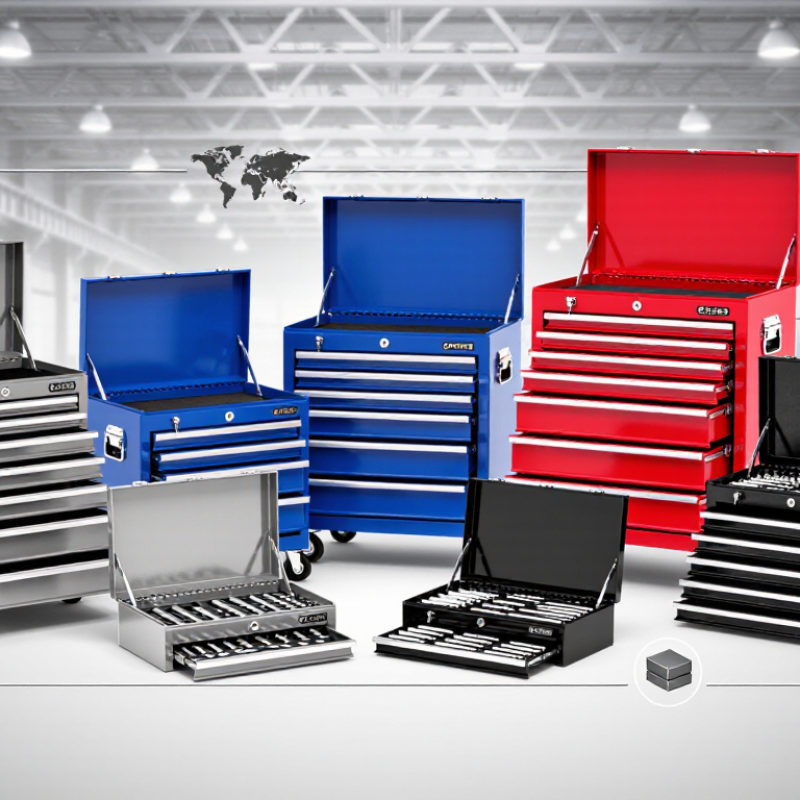
Metal tool boxes are rigid containers designed to protect and organize hand tools, repair parts, and small equipment. They are commonly made from steel or aluminum, with finishes that help resist scratches and moisture. Typical features include hinged lids, secure latches, removable trays, and reinforced corners. Some models have drawers; others keep tools in one open compartment. Simple, but useful.
Global buyers use them in workshops, maintenance vehicles, factories, and field-service teams. A technician may carry a compact box with spanners and measuring tools, while a workshop may need larger units for shared equipment. For international orders, buyers often compare external dimensions, empty weight, usable capacity, handle strength, and packaging. These details affect storage, handling, and freight costs. Ask for product specifications and sample inspection when consistency matters.
The right choice depends on the work environment. Steel can suit heavier-duty storage, while aluminum is lighter to carry. Neither material is automatically best for every job. Check how the lid closes, whether edges feel smooth, and how the finish holds up after repeated handling. A box that looks sturdy in a photograph may still have a weak handle or awkward tray. That is easy to overlook. Tool access matters, too: crowded compartments can slow a repair and make small parts harder to find.
A buyer-oriented overview of common metal tool box formats, their typical construction, and practical selection considerations. The entries describe product categories, not a ranked list of named manufacturers.
| No. | Metal Tool Box Type | Common Construction | Typical Use | Buyer Considerations |
|---|---|---|---|---|
| 1 | Portable steel tool box | Formed steel panels, a hinged lid, a carrying handle, and a latch; some designs include removable trays. | Carrying hand tools for maintenance, repair, and general workshop tasks. | Check internal dimensions, handle comfort, tray layout, corrosion protection, and whether the latch can be secured with a padlock. |
| 2 | Cantilever tool box | Metal body with linked trays that open outward to provide access to multiple storage levels. | Organizing smaller tools and parts for mobile service work or compact workspaces. | Compare tray depth, opening stability, folded dimensions, and the weight of the box when fully loaded. |
| 3 | Rolling tool cabinet | Steel cabinet with drawers, casters, and commonly a locking mechanism; drawer configuration varies by model. | Storing and moving tools around workshops, service bays, and production areas. | Review cabinet dimensions, drawer-slide design, caster type, locking arrangement, and stated load limits. |
| 4 | Top chest and roller cabinet set | A drawer chest designed to sit on a wheeled cabinet, creating stacked tool storage. | Building a stationary or mobile workstation with separate storage for frequently used and larger tools. | Confirm that the chest and cabinet are compatible, can be secured together, and fit the available floor and bench space. |
| 5 | Truck bed tool box | Metal storage box fitted to a pickup bed; common configurations include cross-bed, side-mount, and chest styles. | Keeping tools and equipment organized in work vehicles used for construction, utilities, and field service. | Match the box style and dimensions to the vehicle, check mounting requirements, lid clearance, drainage, and weather-resistant features. |
| 6 | Jobsite storage box | Large metal container, often with reinforced panels, a hinged lid, and provision for locking. | Storing tools and supplies at construction sites, workshops, and other fixed work locations. | Assess capacity, lifting or handling method, lock compatibility, site access, and any applicable transport or workplace requirements. |
| 7 | Wall-mounted metal tool cabinet | Steel enclosure with shelves, hooks, or a pegboard-style back panel; designed for fixed installation. | Keeping frequently used tools visible and organized in garages, workshops, and maintenance rooms. | Check mounting points, wall suitability, cabinet depth, door clearance, and the stated load capacity of shelves and fixings. |
| 8 | Stainless-steel tool box | Box made from stainless steel, typically with folded or welded panels and a hinged or removable lid. | Tool storage where resistance to corrosion is an important consideration, including some damp or washdown environments. | Confirm the stainless-steel grade and finish; corrosion performance depends on the grade, environment, fabrication, and maintenance. |
| 9 | Aluminum tool box | Lightweight metal enclosure made from aluminum sheet or tread plate, with a lid, hinges, and latches. | Vehicle, field, and general-purpose storage where reducing box weight is useful. | Compare usable capacity, panel thickness, mounting method, lid seals, and load suitability; aluminum is not automatically waterproof. |
| 10 | Drawer-style service-vehicle box | Metal storage unit with sliding drawers or compartments, configured for installation in a service vehicle. | Separating tools, parts, and equipment for mobile technicians and fleet maintenance teams. | Measure the available vehicle space, check drawer travel and retention, verify mounting points, and consider vibration and load requirements. |
It protects and organizes hand tools, repair parts, and small equipment. Think spanners, measuring tools, and loose screws.
Steel often suits heavier-duty storage, while aluminum is lighter to carry. Neither is best for every job. Check the actual load and handling needs.
Compare dimensions, empty weight, usable capacity, handle strength, latches, trays, and drawer movement. Small details matter. Smooth edges matter, too.
Request drawings, material specifications, and a sample when fit or drawer operation is critical. Load the drawers, inspect welds, and close the lid. Photos aren't enough.
Ask about production capacity, quality checks, lead times, sample approval, and replacement hardware. Get agreed specifications in writing. Easy to miss.
Some manufacturers offer custom dimensions, dividers, colors, and packaging. Confirm tooling costs and sample approval before production. Don't assume every option is standard.
Compare delivered cost, including accessories and protective packaging, not just unit price. A low quote may omit corner protection. That can sting.
Confirm carton protection and shipment labels to help prevent damage in transit. Ask whether hinges, locks, or drawer slides can be reordered. I might overlook that myself.
This article explains what a Metal Tool Box is and how buyers use it to organize, protect, and transport tools in workshops, factories, service vehicles, and other work environments. It outlines the main factors to consider when evaluating manufacturers, including product range, material and construction quality, customization options, production capacity, communication, and suitability for different markets.
The article also profiles ten manufacturers and compares their products, capabilities, and market focus to help readers understand the available sourcing options. It concludes with practical guidance for selecting a supplier, clarifying product requirements, requesting samples or specifications, assessing quality and delivery expectations, and communicating clearly throughout the purchasing process. The goal is to help global buyers make a considered choice that fits their intended use, budget, and supply needs.