What Is the Best Type of Garage Tool Cabinet?

Time:2026-10-07 Author:Sienna
0%

Choosing the best type of garage tool cabinet is less about appearance and more about daily performance. A cabinet should protect tools, reduce searching time, and fit the way work happens. The Freedonia Group’s Household Storage Products analysis identifies durability, organization, and space efficiency as continuing priorities for storage buyers. Those priorities matter in a real garage, where metal filings collect under drawers and a heavy drill can damage weak runners.

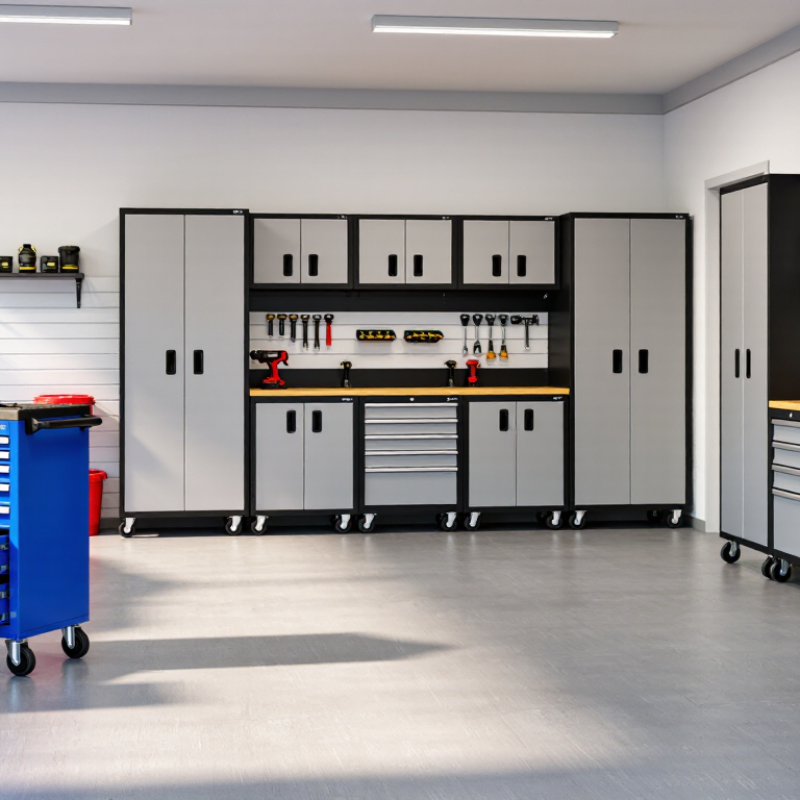
Garages Tool Cabinets come in several useful forms. Rolling steel cabinets suit mechanics who move tools between a vehicle and a workbench. Wall-mounted units preserve floor space and help keep frequently used tools at eye level. Modular cabinets provide flexibility, especially when a workshop expands. Grand View Research’s storage industry reporting also points toward stronger demand for organized, space-saving systems, reflecting smaller work areas and growing home improvement activity. The data supports a trend, not a universal answer.

Measure carefully. Check drawer capacity, wheel quality, lock construction, corrosion resistance, and the cabinet’s fully loaded weight. A glossy finish is not enough. In humid garages, thin steel may disappoint. I have seen drawers sag when owners ignored load ratings. That mistake is easy to repeat.

The best choice depends on your tools, floor space, climate, and budget. No cabinet wins every garage. This guide compares construction, mobility, security, ergonomics, and long-term value, while recognizing an uncomfortable truth: the cheapest cabinet may cost more after repairs, replacements, and wasted time.
What Is the Best Type of Garage Tool Cabinet?

Main Types of Garage Tool Cabinets and Their Key Differences

Choosing the best garage tool cabinet starts with understanding the main cabinet types. Freestanding rolling cabinets offer high capacity and easy repositioning. Their casters help when your workspace changes. However, loaded drawers can make movement difficult. Space changes everything.

Wall-mounted cabinets preserve floor space and keep tools above vehicles or benches. They suit smaller garages, but installation quality matters. Weak anchors can create dangerous instability. Modular floor cabinets provide a more permanent workstation. Many include adjustable shelves, drawers, and compatible worktops. They offer better customization than single-piece units, although assembly takes longer. Overhead cabinets add storage without consuming floor area. They work well for seasonal tools, but access is less convenient.

Material and construction separate dependable cabinets from decorative ones. Look for powder-coated steel, reinforced drawer fronts, full-extension slides, and clearly stated load ratings. A 2024 Grand View Research analysis projects the global garage storage market to grow at about 5.1% annually through 2030. That growth reflects demand for organized, space-efficient storage, not automatically better quality. Market estimates can vary by research method. Treat them as direction, not proof.

In practical use, rolling cabinets suit active repairs and changing layouts. Wall-mounted units suit compact garages and frequent cleaning. Modular systems suit long-term workshops with expanding tool collections. I have found that oversized cabinets often become metal graveyards for forgotten hardware. Measure your wall, aisle, and drawer-opening clearance first. Then compare usable capacity, not advertised dimensions. A smaller cabinet with logical drawer depths may outperform a larger, poorly divided model.

What Is the Best Type of Garage Tool Cabinet?

Each cabinet type serves a different storage need. Rolling cabinets prioritize mobility, tool chests maximize drawer storage, wall-mounted cabinets save floor space, and modular cabinets provide the greatest capacity and flexibility.

How to choose: Choose a rolling cabinet for mobility and heavy everyday use, a tool chest for compact drawer-based organization, a wall-mounted cabinet when floor space is limited, or a modular cabinet when you need expandable storage and a customized layout. Dimensions shown are representative common sizes and vary by configuration.

How Storage Capacity and Organization Affect Cabinet Selection

What Is the Best Type of Garage Tool Cabinet?
How Storage Capacity and Organization Affect Cabinet Selection

A garage cabinet should match the tools you actually use, not an imagined workshop. Measure the wall, floor clearance, and door swing before comparing storage capacity. A cabinet that looks generous can become frustrating when drawers open into a vehicle or workbench. Record your largest tools, including cases, chargers, and seasonal equipment. These measurements reveal whether you need deep drawers, tall compartments, or adjustable shelves.

Organization affects speed as much as capacity. Shallow drawers suit sockets, bits, and measuring tools because each item stays visible. Deeper drawers hold drills, clamps, and protective equipment without forced stacking. Shelves work better for bulky containers, but small parts need trays or divided bins. Labels help, although labels alone cannot fix poor layout. Keep frequently used tools between waist and shoulder height. Store heavy items low to reduce tipping risk and lifting strain.

I once chose a cabinet with maximum volume and regretted it. Small hardware disappeared inside deep drawers, while the narrow top drawer filled with unrelated items. A mixed layout would have served me better. Check drawer load ratings, locking quality, wheel stability, and corrosion resistance in damp garages. Smooth drawer travel matters during daily use. So does lighting. Leave some empty space for future tools; a fully packed cabinet is organized only briefly.

What Is the Best Type of Garage Tool Cabinet? - How Storage Capacity and Organization Affect Cabinet Selection

Cabinet Type Typical Storage Capacity Organization Features Best For Main Advantages Selection Considerations
Rolling Tool Chest Approximately 20–50 cubic feet Multiple drawers, full-extension slides, locking casters, and a separate upper compartment on some models Frequent users who need a broad range of hand tools in one mobile station High drawer capacity, good tool visibility, and easy movement around the garage Check loaded weight capacity, drawer depth, wheel quality, and clearance for opening drawers
Rolling Utility Cabinet Approximately 15–35 cubic feet A combination of drawers, shelves, doors, and adjustable interior storage General-purpose garages storing tools, power equipment, and larger supplies Balances drawer organization with space for bulky items and containers Review shelf load ratings, door swing area, internal dimensions, and overall footprint
Base Cabinet Approximately 10–25 cubic feet per unit Drawers or enclosed shelves; can be combined with a worktop or wall storage Fixed workstations and garages where stability is more important than mobility Stable, space-efficient, and suitable for creating a continuous work surface Measure wall length and worktop height; verify anchoring requirements and floor levelness
Tall Storage Cabinet Approximately 20–45 cubic feet Vertical shelves, adjustable levels, doors, and sometimes drawers or small-part bins Garages with limited floor space but sufficient wall height Uses vertical space efficiently and accommodates long or irregularly shaped items Confirm ceiling clearance, cabinet depth, wall anchoring, and shelf accessibility
Wall-Mounted Cabinet Approximately 5–15 cubic feet per unit Adjustable shelves, doors, pegboard panels, and compact small-parts organizers Small garages or users who want to keep tools off the floor Preserves floor area and helps protect tools from floor-level moisture and clutter Locate wall studs, verify mounting hardware, check wall load capacity, and allow door clearance
Modular Cabinet System Approximately 25–80+ cubic feet, depending on configuration Interchangeable drawers, shelves, wall panels, work surfaces, and accessory sections Users with expanding tool collections or changing storage requirements Highly customizable and easier to expand than a single fixed cabinet Plan the complete layout, compare component compatibility, and account for future floor space
Compact Tool Cabinet Approximately 5–15 cubic feet Several shallow drawers, a small shelf, and compact locking hardware Light-duty maintenance, apartment garages, and limited tool collections Lower space requirement, easier placement, and adequate organization for essential tools Avoid overloading shallow drawers and check whether larger power tools will fit
Selection rule: Choose drawer-heavy cabinets for small hand tools and frequent access, shelf-and-door cabinets for bulky equipment, and modular systems when storage needs are likely to grow.

Comparing Materials, Construction, Security, and Mobility

A garage tool cabinet should match the work, not just the wall color. In my workshop, powder-coated steel has survived oil drops, fallen sockets, and winter humidity. Steel resists dents better than thin aluminum, but it adds weight. Aluminum moves more easily. It can scratch sooner. Wood feels warmer, though moisture may swell poorly sealed panels. Check the metal thickness, welds, drawer slides, and corner joints. A cabinet can look strong and still flex when fully loaded. That happened to mine.

Construction affects daily use more than appearance. Full-extension drawers let you see small bits at the back. Ball-bearing slides should move smoothly without side-to-side wobble. Reinforced bottoms matter for heavy drills and cutting tools. Security also deserves practical attention. A lockable drawer can discourage casual access, but it cannot replace sensible storage habits. Keep sharp tools secured, and avoid leaving keys inside the cabinet. The lock should engage cleanly, even when the drawer is slightly uneven.

Mobility is useful when the cabinet has sturdy casters and dependable brakes. Larger wheels cross concrete joints better than small wheels. A wide base reduces tipping during movement. However, a loaded cabinet becomes difficult to steer near a vehicle or narrow bench. Place heavier tools in lower drawers. Check the total load rating before filling every compartment. I once prioritized maximum capacity and underestimated floor space. The cabinet worked, but opening drawers beside a workbench became awkward. Measure doorways, corners, and floor transitions before buying.

Matching Cabinet Features to Tools, Workspace, and Garage Conditions

What Is the Best Type of Garage Tool Cabinet?

Matching Cabinet Features to Tools, Workspace, and Garage Conditions

The best cabinet depends on your tools, available space, and garage conditions. A rolling steel cabinet suits mechanics who move between a workbench, vehicle, and storage area. Choose deep drawers for power tools, but check their weight ratings carefully. Full drawers can become surprisingly heavy. I learned this after a drawer jammed under a load of sockets and clamps.

A wall-mounted cabinet works better in a narrow garage with limited floor space. It keeps tools above the car hood and protects them from accidental impacts. However, the wall must support the cabinet and its contents. Measure the studs, cabinet depth, and door swing before buying. Even a small measurement error can block a walkway. For long-handled tools, add a separate vertical section instead of forcing them into shallow drawers.

Garage conditions also shape the decision. In humid spaces, powder-coated steel, sealed drawer edges, and corrosion-resistant hardware offer practical protection. A dry garage may allow more flexible material choices. Smooth casters help on concrete, while locking casters keep the cabinet stable during use. Look for reinforced drawer slides and a lockable compartment when storing sharp tools. Labels improve reliability, although my own system usually needs revision after each major project. A cabinet should support real work, not just look organized.

How to Choose the Best Garage Tool Cabinet for Your Needs

Choosing the best garage tool cabinet starts with your working habits, not its advertised size. In my workshop, a cabinet became useful only after I measured the wall, walking space, and outlet locations. Record your largest tools first. A deep drawer may hold a drill, but it can waste space beside a narrow workbench. Steel construction offers strength, while powder-coated surfaces resist ordinary workshop scuffs and light moisture. Avoid assuming the heaviest cabinet is the safest choice. Weight matters, but poor placement creates daily frustration.

Drawer design deserves close attention. Full-extension slides let you reach fasteners at the back without kneeling or guessing. Shallow top drawers suit bits, measuring tools, and pencils. Deeper drawers handle sanders or hand planes, but they need stronger slides. Check the rated load for each drawer, not only the total capacity. A central lock can protect tools from casual access, although it cannot replace sensible supervision. Smooth casters help reposition the cabinet, yet locking wheels are essential on sloped or polished floors. Test the handle height. Your back will notice.

Match the finish and layout to your garage climate. In a humid space, inspect seams, drawer edges, and wheel hardware for corrosion-resistant treatment. Ventilation also matters when stored tools are damp. I once selected a cabinet with attractive drawers but too little knee clearance. It looked efficient and worked badly. That mistake changed my checklist: open every drawer, test the empty movement, and imagine a crowded Saturday repair. Leave some unused capacity for future tools. Still, buying extra storage can encourage clutter, so review your actual tool collection before paying for features you may never use.

FAQS

How do I choose the right garage tool cabinet size?

Measure the wall, floor clearance, and door swing. Record your largest tools, cases, chargers, and seasonal equipment. Leave some empty space.

Are deep drawers always better for garage tools?

No. Shallow drawers keep sockets, bits, and measuring tools visible. Deep drawers suit drills, clamps, and protective equipment. Small hardware can disappear inside them.

Where should frequently used tools be stored?

Keep them between waist and shoulder height. Store heavy items in lower drawers. This reduces lifting strain and tipping risk.

Is a rolling cabinet suitable for an active workspace?

Yes, especially when tools move between a workbench and vehicle. Choose stable locking casters and strong drawer slides. Full drawers become heavy quickly.

When is a wall-mounted cabinet a better choice?

It suits narrow garages with limited floor space. Check the wall studs, cabinet depth, and door swing. A small error may block the walkway.

How should long-handled tools be stored?

Use a separate vertical section. Shallow drawers force awkward storage and waste space. Brooms and handles need height.

What cabinet features help in humid garages?

Choose powder-coated steel, sealed drawer edges, and corrosion-resistant hardware. Keep the cabinet away from standing water. Damp concrete still causes problems.

How can I organize small parts effectively?

Use trays, divided bins, and clear labels. Labels help, but they cannot repair a poor layout. My own system needs revision after large projects.

Should a garage cabinet have a lock?

A lockable compartment adds useful control around sharp tools. Check lock quality before buying. Security alone does not replace careful storage.

What mistake should I avoid when selecting a cabinet?

Do not choose maximum volume without checking drawer layout. I once filled a narrow top drawer with unrelated items. More capacity was not better.

Conclusion

Choosing the best garage tool cabinet depends on how you work, what you store, and the conditions of your workspace. Garages Tool Cabinets come in several types, including rolling cabinets, stationary units, wall-mounted storage, and modular systems. Each option offers different advantages in capacity, accessibility, and flexibility. Rolling models are useful for mobile projects, while wall-mounted and stationary cabinets can save floor space and provide stable, organized storage. The right drawer layout, shelves, compartments, and weight capacity can make tools easier to find and help prevent clutter.

Material and construction also matter when comparing cabinets. Durable metal, strong joints, smooth drawer slides, secure locking systems, and reliable casters can improve long-term performance. Consider whether your garage is humid, crowded, or frequently used, and choose features that match those conditions. Before buying, evaluate your tool collection, available space, preferred mobility, security needs, and future storage requirements. A well-selected cabinet should keep tools protected, organized, accessible, and suited to your everyday projects.


Sienna

Sienna

Sienna is a skilled marketing professional with a deep expertise in our company’s core products and services. With a passion for innovation and detail, she plays a pivotal role in crafting insightful blog posts that not only highlight the unique features of our offerings but also provide valuable......