The best Tool Chests do more than hold equipment. They keep essential tools visible, protected, and close at hand. In a busy garage, that might mean a shallow top drawer for calipers, deep drawers for power tools, and smooth casters that roll across a concrete floor without snagging. Small details matter. So does honest capacity: a chest that looks spacious can feel cramped once sockets, drills, and hardware share the same space.
Norm Abram, the master carpenter and longtime woodworking educator, offers a useful workshop-minded test. In the spirit of his practical approach: “Can I find the right tool without breaking my rhythm?” Treat that as a buying principle, not a verified direct quotation. A chest should suit the work, the room, and the person using it—not just look impressive in a product photo.
This Top 10 guide compares Tool Chests for 2026 by storage layout, build quality, mobility, security, and value. It considers compact options for home garages alongside larger chests for demanding workshops. The trade-offs are real: thicker steel adds weight, while more drawers can mean less room for bulky tools. No single model fits every shop. A detail easy to overlook is drawer access when the chest sits beside a wall. Check dimensions and load ratings before buying, then compare the picks against your actual tools. Even a strong chest can disappoint if its layout fights your habits.
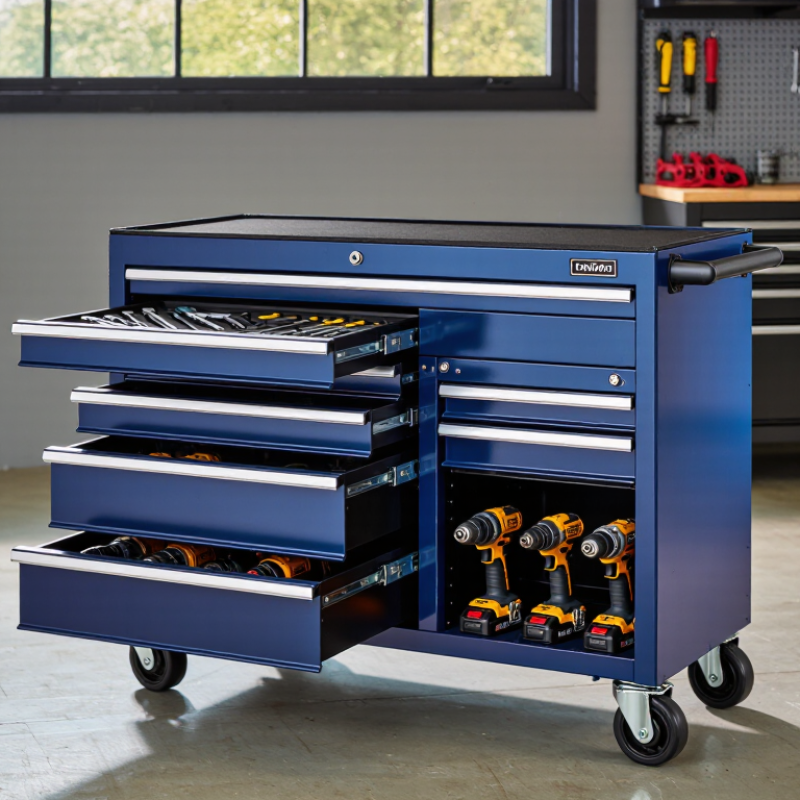
A portable chest suits small repair jobs and shared work areas. Its removable tray keeps sockets and pliers close, though heavy tools can make it awkward to carry. A rolling cabinet works better for a fixed workshop. Drawers separate hand tools, while a wide top can hold a vise or parts tray. For larger collections, a top chest adds storage without taking up more floor space. Modular units offer flexibility, but stacked boxes can be slow to access during busy work.
Tool storage supports orderly work, but it does not guarantee safer work. The U.S. Bureau of Labor Statistics reported 2.8 nonfatal injury and illness cases per 100 full-time equivalent workers in manufacturing in 2023, compared with 2.4 across private industry. These figures describe workplace rates, not tool-chest effects. Still, clear drawer labels and a consistent place for each tool can make misplaced equipment easier to spot. Small details matter.
Tips: Match drawer depth to your largest tools, and check the chest’s rated load before filling it. Put frequently used items between waist and shoulder height. A chest can be imperfect: shallow drawers may frustrate you, so test the layout with your actual tools before buying.
Choosing a tool chest starts with the tools it must hold, not the number of drawers in a product photo. Measure the longest wrench, tallest drill, and widest case before comparing interiors. Check drawer depth and usable width; thick liners and dividers can reduce both. A drawer that opens smoothly when empty may sag under sockets and power tools. That matters. Look for clear load ratings and slides suited to the expected weight. Published ratings help, but they cannot show how a fully loaded drawer feels in daily use.
Capacity is only one part of the fit. A tall chest saves floor space, while a wider cabinet may feel steadier when drawers are open. Check caster size, wheel locks, and the rated total load, especially on uneven concrete. Inspect corners, drawer seams, and the coating for signs of flimsy construction or likely rust exposure. Locks can discourage casual access, but they are not a substitute for secure storage. Read the warranty terms and assembly requirements, too. Small details count. Before buying, measure doorways and the space needed to open drawers fully. It is easy to overestimate a workshop’s available room; even a capable chest can become awkward when parked beside a bench.
The best tool chests to buy in 2026 should fit the work, not just look impressive in a garage. A useful top-ten comparison should include compact rolling cabinets, deep-drawer units, modular systems, and larger workshop chests. Check drawer load ratings, overall capacity, wheel locks, and the chest’s footprint before buying. Measure the doorway, too. A heavy cabinet that cannot reach the work area is a poor investment. For frequent use, smooth drawer slides and a stable top matter more than a high drawer count.
Safety and organization deserve attention. The U.S. Bureau of Labor Statistics reported 2.6 million nonfatal workplace injuries and illnesses in private industry during 2023. That figure does not prove that tool storage prevents injuries, but orderly storage can help keep walkways and work surfaces clear. Look for a secure locking system, rounded edges, and casters suited to the floor. Small details matter. Compare listed specifications with the tools you actually own; long-handled tools and bulky power equipment can defeat a neat-looking layout. I would also treat advertised capacity cautiously, since loaded drawers may feel different in daily use. A 2026 shortlist is strongest when it weighs durability, access, fit, and price together.
A useful tool chest should fit the tools you own, not just look spacious in a showroom. Measure the longest items, such as levels or pry bars, before comparing drawer dimensions. Deep drawers hold bulky gear, while shallow ones make sockets and small parts easier to see. Check the stated load rating for each drawer, not only the chest’s total capacity. A fully loaded drawer can sag or become awkward to open. Measure twice.
Mobility matters when the chest must cross a garage floor or move between work areas. Larger casters usually roll more steadily over cracks, but they add height and can make a loaded chest harder to steer. Locking wheels help keep it in place during use. Small wheels struggle. Consider the route, including doorways and ramps, rather than judging mobility by wheel size alone.
Security and value depend on daily conditions. A keyed lock can discourage casual access, but it does not make a chest theft-proof. Check whether the lid and drawers lock together, and whether the metal feels rigid around hinges and handles. Compare price with usable capacity, drawer action, caster quality, and warranty terms. It is easy to overvalue extra drawers; I would rather have fewer drawers that open smoothly than a crowded cabinet with a low load rating.
The right tool chest depends less on its drawer count than on the work around it. For a small home garage, a compact rolling chest can keep sockets, pliers, and fasteners close without swallowing a parking space. Measure the available floor area, including room to open drawers and walk past the chest. Space matters. A wall-mounted cabinet may suit occasional repairs, but it is less convenient when tools need to move between work areas.
For a mobile technician, smooth casters, a secure handle, and a reliable drawer lock matter more than a polished finish. Check the listed load capacity, and keep heavier tools in lower drawers to reduce tipping risk. A large chest looks useful in a showroom. In a narrow workshop, it can become an obstacle. That adds up.
Shared workspaces need clear labeling and drawers that are easy to organize, so tools return to the right place. A wider chest may help a busy shop, but only if its footprint leaves safe walking paths. For hobbyists, adjustable dividers and a shallow top tray can make small parts easier to find. One overlooked detail is drawer depth: deep drawers hold bulky tools, yet small items may disappear at the back. There is no perfect layout. Compare measurements, mobility, storage needs, and the tools you actually use before choosing.
Measure your longest wrench, tallest drill, and widest case. Check drawer depth and usable width, not just the outside dimensions. I often misjudge the space.
Measure the floor area, doorway, and room needed to open drawers fully. Leave a clear path beside the chest. Tight spaces get awkward fast.
Heavy sockets and power tools can strain slides or make drawers sag. Compare rated loads with what you plan to store. Ratings still cannot show the whole story.
No. A wide chest may feel steadier with open drawers, but it can block walkways. A tall cabinet saves floor space, though its fit depends on your tools.
Check caster size, wheel locks, handle security, and total load rating. Keep heavier tools in lower drawers to reduce tipping risk. Small details matter.
A compact rolling chest can hold sockets, pliers, and fasteners without taking much floor space. Measure room for walking and opening drawers, too.
Clear labels and adjustable dividers help tools return to the right drawer. A shallow tray keeps small parts visible. Some pieces still go missing.
Look at drawer seams, corners, coating, assembly needs, and warranty terms. Check that the finish and structure suit your workspace. Photos can be misleading.
Choosing the right Tool Chests in 2026 starts with understanding how different designs serve different workshop needs. Stationary chests provide substantial storage for fixed work areas, while rolling models make tools easier to move between tasks. Compact cabinets and modular options can suit smaller spaces or users who need flexible organization. When comparing choices, consider drawer capacity and layout, construction, ease of movement, locking features, and overall value.
This guide reviews ten types of tool chests and compares their storage capacity, mobility, security, and practical usefulness. The best option depends on the size of your workspace, the tools you own, how often you relocate them, and your budget. Whether you are setting up a home workshop or organizing a busy work area, a carefully chosen chest can keep equipment accessible, orderly, and protected while making everyday projects easier to manage.