China has become a major manufacturing base for Garage Cabinets Storage, serving contractors, distributors, and private-label brands worldwide. Its strengths include steel processing, powder coating, modular design, and scalable production. Yet low price alone is not enough. Buyers need evidence.
The Freedonia Group’s Storage and Organization Products research identifies durability, space efficiency, and customization as important purchasing factors. Grand View Research also reports continued growth in home organization products, supported by urban living and rising renovation activity. These trends reach the garage. A well-designed cabinet can protect tools from dust, moisture, and accidental impact. It can also turn a crowded floor into a safer working zone. Small details matter. Look for welded frames, adjustable shelves, concealed hinges, load ratings, and tested coating thickness. Ask for factory inspection records, material specifications, and consistent sample results.
Professional organizer Peter Walsh describes clutter as “anything that gets between you and the life you want to be living.” His observation applies directly to garage planning. However, cabinet capacity is not the whole answer. Poor layout still wastes space. A tall cabinet beside a vehicle may restrict door movement. A glossy finish may look attractive but reveal fingerprints quickly. These are easy mistakes.
This guide examines China’s best Garage Cabinets Storage options for global buyers. It considers manufacturing experience, quality control, customization, packaging, and after-sales communication. Standards and buyer expectations differ across markets. Therefore, responsible sourcing requires verification, not assumptions. The best supplier is rarely the cheapest one. It is the partner that documents performance and admits where improvement remains necessary.
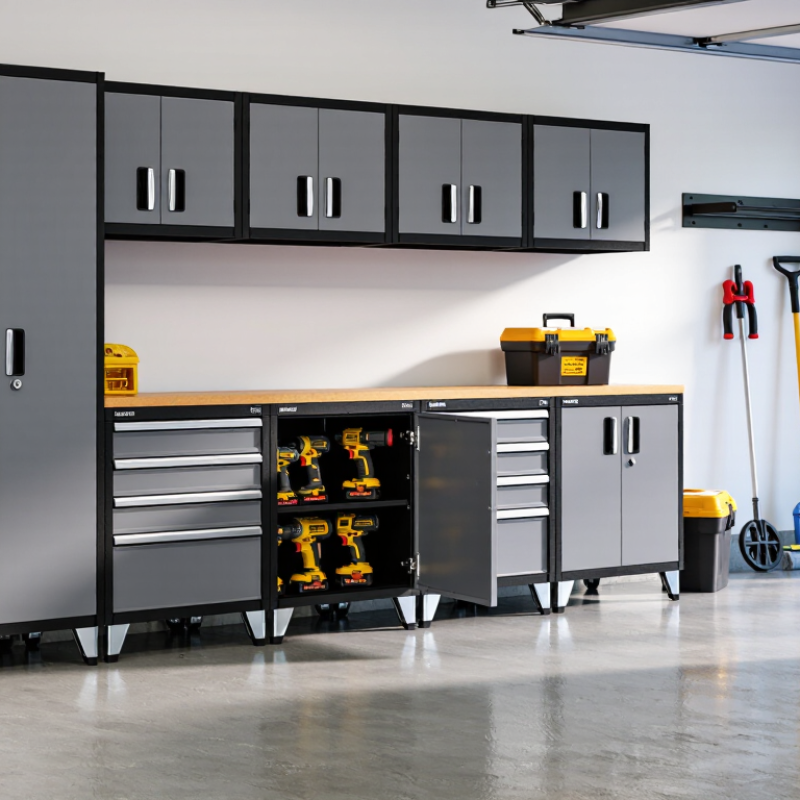
The best garage cabinets for global buyers must perform beyond a showroom. They need durable steel, accurate dimensions, and dependable protection against dust, moisture, and daily impacts. A strong cabinet usually includes reinforced doors, smooth hinges, adjustable shelves, and secure locking hardware. Load capacity matters too. A shelf holding tools today may carry heavier equipment later. Buyers should request test data, material thickness, coating details, and clear installation instructions before placing an order.
Practical sourcing also depends on communication and consistency. Export-ready suppliers should provide accurate drawings, carton measurements, pallet information, and replacement-part support. Packaging deserves close attention. A scratched door or bent corner can create expensive delays after a long shipment. Check whether the cabinet suits local garages, including ceiling height, wall structure, voltage requirements for powered accessories, and regional safety expectations. A perfect cabinet does not exist. Even a well-built unit may need better ventilation in humid climates.
Tips: Measure the wall twice. Leave space for doors and handles. Ask for a sample finish before approving a large order. Inspect welds, drawer movement, and coating coverage. Do not judge quality by appearance alone. A glossy surface can hide weak hinges or thin panels. Buyers should compare documented specifications with physical samples and keep approved details in writing. This small discipline reduces misunderstandings and supports more reliable purchasing decisions.
Choosing garage cabinets for global buyers requires more than comparing photographs and prices. Material selection affects durability, safety, and maintenance. Powder-coated steel resists scratches and handles daily workshop use well. Galvanized parts offer better protection in humid garages. Stainless steel suits damp areas, but it usually costs more. High-density board can reduce weight, although poor edge sealing may cause swelling.
Design details deserve close inspection. Adjustable shelves help store drills, paint containers, and small hardware efficiently. Full-extension drawers make tools easier to reach, especially under a crowded workbench.
Lockable doors provide controlled access, while soft-close hinges reduce noise and wear. Check the cabinet depth against vehicle doors and walking space. Small measurements matter.
Storage features should match real working habits. Perforated back panels can hold frequently used screwdrivers and clamps. Integrated cable openings keep chargers away from wet floors. Strong casters support flexible layouts, but weak wheels can damage flooring.
Ask for load ratings, coating tests, assembly instructions, and replacement-part policies before ordering. Sample inspection is wiser than trusting polished images.
No cabinet is perfect. I once preferred a deeper unit, then found it blocked a narrow passage. That mistake changed my comparison method: measure the room, list actual tools, and review the cabinet’s weak points before judging its appearance.
Evaluating Chinese garage cabinet manufacturers requires more than comparing online prices. Check factory ownership, production equipment, and quality procedures. Request business licenses, export records, and recent project references. A reliable supplier should explain steel thickness, coating standards, load capacity, and assembly tolerances clearly. Ask for a sample cabinet before placing a large order. Inspect its welds, drawer movement, hinges, and edge finishing. Small defects often reveal weak process control.
Tips: Request a video factory tour. Confirm sample details in writing. Compare the sample with mass production terms. Ask how damaged panels are replaced. Photos are not proof. I once underestimated packaging strength; a well-made cabinet arrived with bent corners after poor pallet protection. The mistake showed why packaging tests matter as much as cabinet design.
Examine powder coating adhesion, moisture resistance, and corrosion testing for your target climate. Coastal buyers may need stronger protective treatment than buyers in dry regions. Confirm carton dimensions, pallet materials, labeling, and inspection responsibility before shipment. A professional manufacturer should provide drawings, material specifications, and inspection reports. Independent third-party inspection can reduce uncertainty, although it adds cost and time. Be careful with unusually cheap offers. They may reflect thinner steel, fewer coating layers, or inconsistent accessories. Also evaluate communication: clear replies, stable documentation, and realistic delivery dates are practical signs of reliability.
China Best Garage Cabinets Storage for Global Buyers
For global buyers, garage cabinets should fit real working spaces, not only catalog drawings. Customization may include cabinet width, drawer depth, pegboard placement, locking systems, and electrical access. Measure wall gaps, floor slopes, and vehicle clearance before approving production. A two-millimeter error can complicate installation.
Quality control must continue beyond visual inspection. Experienced factories check steel thickness, weld strength, coating adhesion, drawer movement, and door alignment. Sample cabinets can undergo load testing with weighted drawers and shelves. Packaging also matters. Corner protectors, moisture barriers, and reinforced cartons reduce damage during ocean transport. Small details count.
International certifications need careful verification. Buyers should request current certificates, testing reports, and the exact product scope. An ISO 9001 certificate shows a quality management system, but it does not automatically prove every cabinet is flawless. Relevant market requirements may also cover coating safety, materials, packaging, or electrical accessories. Certification claims should match the destination country.
Customization can create risks. Unique sizes may increase tooling costs, while special colors can vary between batches. One sample is not enough. A pre-production inspection, production photos, and a final random inspection provide stronger evidence. Even then, mistakes happen. A reliable supplier records corrective actions instead of hiding them. Clear drawings, approved samples, and written tolerances make international cooperation more predictable.
Customization, quality control, and international certification are key considerations when sourcing garage cabinets for overseas markets.
The chart presents the first publication year of internationally recognized management standards commonly referenced in global manufacturing and procurement: ISO 9001 for quality management, ISO 14001 for environmental management, ISO 45001 for occupational health and safety, and ISO 50001 for energy management. These standards support structured quality control and responsible production but do not represent certification status for any specific company.
Global buyers need more than a low factory quote. Ordering garage cabinets from China works best when specifications are measurable. Confirm cabinet dimensions, steel thickness, coating type, drawer load, handles, locks, and included hardware. Ask for a packing list and a pre-shipment inspection record. Photos help, but they cannot replace measurements. That lesson matters. Request samples when the project is large, because colors may change under different warehouse lighting.
Shipping details deserve equal attention. Agree on trade terms, loading methods, carton labels, and delivery responsibilities before payment. Strong corner protection reduces dents during long sea transport. Moisture-resistant wrapping is useful in humid routes. Import documents should match local requirements. A common mistake is measuring only the cabinet body. Buyers should also check door clearance, pallet size, and elevator access at the destination.
Installation depends on the product structure and the garage wall. Flat-pack units need clear instructions, numbered parts, and suitable anchors. Wall conditions may require different fixing hardware. Ask whether replacement screws, hinges, or drawer slides can be purchased later. Reliable after-sales support should define response times, warranty coverage, spare-part procedures, and damage claims. Keep photos during unpacking. Yet no checklist is perfect. A small drawing error can still delay installation, so a final layout review remains worthwhile.
Powder-coated steel handles scratches and daily workshop use. Galvanized parts perform better in humid spaces. Stainless steel suits damp areas but costs more. High-density board is lighter. Poor edge sealing may cause swelling.
Check adjustable shelves, full-extension drawers, lockable doors, and soft-close hinges. These features improve access, control, and noise levels. Small measurements matter. Confirm depth before ordering.
Measure walls, vehicle doors, walking paths, and workbench clearance. Do not measure only the cabinet body. Check pallet size and elevator access too. Measure twice.
Perforated panels hold screwdrivers, clamps, and other frequent-use tools. Cable openings keep chargers away from wet floors. Strong casters support flexible layouts. Weak wheels may damage flooring.
Confirm dimensions, steel thickness, coating type, drawer capacity, handles, locks, and included hardware. Request load ratings and assembly instructions. Ask about replacement parts. Photos are not enough.
Samples reveal color differences under warehouse lighting. Inspections can confirm measurements, coating quality, and packing condition. Request a packing list and inspection record. Polished images can mislead.
Agree on trade terms, loading methods, carton labels, and delivery responsibilities. Strong corner protection reduces transport dents. Moisture-resistant wrapping helps on humid routes. Documents should match local requirements.
Flat-pack cabinets need clear instructions, numbered parts, and suitable anchors. Wall conditions may require different fixing hardware. Confirm warranty coverage, response times, damage procedures, and spare-part availability. No checklist is perfect. A small drawing error can still delay installation.
Choosing the best Garage Cabinets Storage for global buyers requires more than comparing appearance and price. Buyers should assess material strength, corrosion resistance, load capacity, modular designs, drawer systems, locking options, and space efficiency. The ideal solution should support different garage layouts while offering durable finishes, safe operation, and convenient access to tools and equipment. Careful comparison of steel grades, surface treatments, assembly structures, and storage functions can help identify products that deliver long-term value.
When evaluating Chinese manufacturers, buyers should review production experience, customization capabilities, quality-control procedures, testing standards, and relevant international certifications. Clear communication is also essential for confirming dimensions, colors, packaging, labeling, and order requirements. Before purchasing, it is important to understand shipping terms, lead times, installation guidance, spare-parts availability, and after-sales support. A reliable supplier should provide consistent quality, transparent documentation, secure packaging, and responsive service throughout the entire process, helping global customers achieve efficient, dependable, and professional garage storage solutions.