Buying tools across borders requires more than comparing prices and product photos. The 2026 Best Tools Garage Buying Guide for Global Buyers examines practical choices for workshops, repair spaces, and professional garages. It focuses on durability, safety, compatibility, and long-term value. A reliable Tools Garage should support real work, not simply look organized online.
During hands-on use, small details quickly become important. A steel drawer should open smoothly under a heavy socket set. A torque wrench should provide clear readings and include calibration information. A cordless drill needs the correct voltage, battery platform, charger, and replacement battery access. These details can prevent costly returns and work delays. They also reveal differences between marketing claims and workshop performance. Not every highly rated tool fits every country or trade. That is worth remembering.
This guide compares manufacturer specifications, warranty conditions, available service networks, and independent testing where possible. Buyers should check local electrical requirements, safety certifications, import rules, and authorized seller status before ordering. Standards and warranty coverage may differ between regions. A product accepted in one market may need additional verification elsewhere. We have also included practical limits, because no buying guide can predict every workshop environment. Dust, humidity, storage space, and operator habits change results. Some recommendations may need reconsideration as brands update products or discontinue parts. Careful buyers should inspect manuals, confirm spare-part availability, and ask suppliers direct questions. Reliable tools cost more at the beginning sometimes. However, dependable performance, safer operation, and accessible support can make the stronger investment over time.
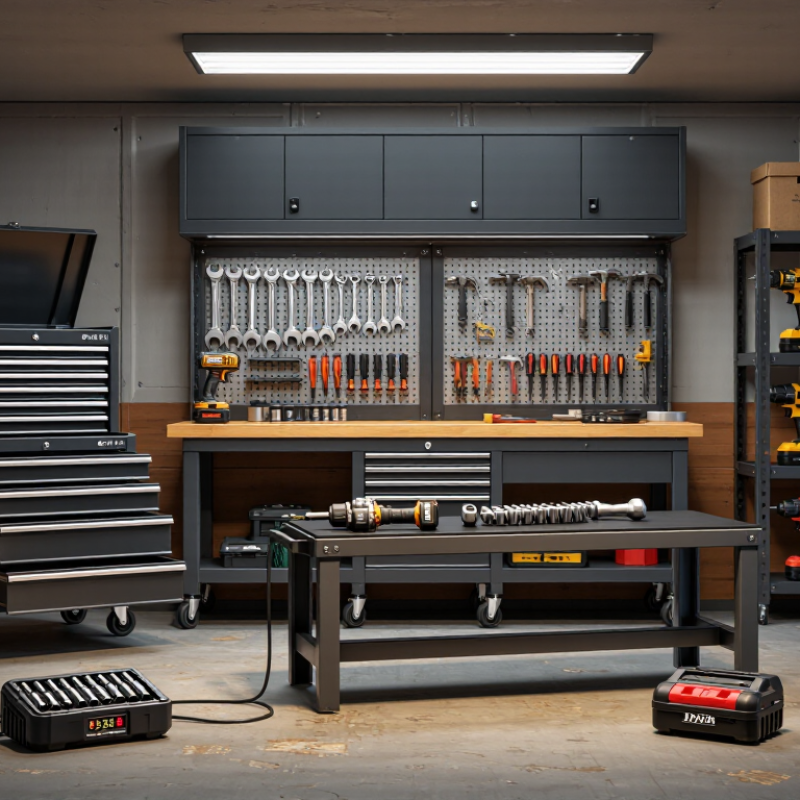
A global garage buyer should define safety needs before comparing tools. OSHA 29 CFR 1910.242(b) requires employers to keep hand and portable power tools safe. Defective tools must not be issued or used. This rule is U.S.-specific, but its principle travels well. Check local regulations before importing equipment.
Begin with the work. A repair garage needs impact tools, torque control, lifting equipment, storage, and inspection space. Measure floor loading, ceiling height, ventilation, and electrical capacity. Keep a clear route around benches and vehicles. Liberty Mutual’s 2024 Workplace Safety Index estimated that serious workplace injuries cost U.S. employers $58.5 billion in 2022. That figure makes weak maintenance planning expensive. It also shows why buying the cheapest tool can be a false saving. I still find that some garages overbuy power and underbuy storage.
Tips: Create a tool register with serial numbers, inspection dates, load ratings, and replacement triggers. Tag damaged cords immediately. Store sharp tools with covered edges. Provide eye protection near grinding areas, since OSHA reports that thousands of workplace eye injuries occur daily. These details feel minor, until a loose guard or cracked handle changes the job.
For global garage buyers, socket fit begins with ISO 1174 drive sizes. The standard defines square-drive dimensions between sockets, extensions, and compatible tools. Common sizes include 1/4-inch, 3/8-inch, 1/2-inch, and 3/4-inch. Smaller drives suit trim fasteners and light assemblies. Larger drives handle higher torque and heavier hardware. I have found that drive size is easier to verify than advertised “professional” strength. Check the square anvil, socket marking, and retaining method before ordering. A mismatched connection wastes time and may damage fastener corners.
IEC 62841 addresses safety for electric motor-operated hand-held and transportable tools. It covers hazards, protective measures, testing, and user information. It does not make every tool suitable for every garage task. Buyers should inspect the declaration, rated voltage, guard design, trigger behavior, and instructions. Battery systems also need charger compatibility and regional electrical checks. These details matter when tools cross borders. Documentation can be translated poorly. Ask for the exact standard edition and test scope.
A practical comparison pairs the mechanical interface with safety evidence. A compact impact tool with a 1/2-inch drive may suit wheel fasteners, but torque control still matters. An electric drill with a chuck is not automatically a socket driver. Use adapters only when their ratings are clear. I once selected a tool by peak torque alone. Access was awkward, and the result disappointed me. That mistake remains useful. Compare working torque, speed range, mass, noise, spare parts, and warranty support. Published numbers may reflect ideal conditions, not a cold morning in an unheated garage.
| Tool Type | Typical Garage Application | Common Drive or Bit Interface | ISO 1174 Drive-Size Reference | Relevant IEC 62841 Reference | Typical Power Configuration | Key Buying Considerations |
|---|---|---|---|---|---|---|
| Manual Ratchet and Socket Set | General fastener removal, vehicle maintenance and assembly work. | Female square socket connection; commonly 1/4 in, 3/8 in, 1/2 in, 3/4 in or 1 in. | ISO 1174-1: 6.3 mm, 10 mm, 12.5 mm, 20 mm and 25 mm nominal square drives. | Not applicable; IEC 62841 covers motor-operated tools. | Manual operation. | Choose drive size according to fastener load. Use impact-rated sockets only with powered impact tools. |
| Cordless Impact Wrench | High-speed removal and tightening of wheel nuts, chassis bolts and structural fasteners. | Male square anvil, most commonly 1/2 in; compact models may use 3/8 in and heavy-duty models may use 3/4 in or 1 in. | Common ISO 1174-1 sizes: 10 mm, 12.5 mm, 20 mm and 25 mm. | IEC 62841-2-2: Particular requirements for hand-held screwdrivers and impact wrenches. | Typically rechargeable battery systems; commercial models may be corded. | Compare rated fastening torque, breakaway torque, speed settings, anvil retention and battery availability. |
| Corded Impact Wrench | Repeated wheel service and workshop fastening where continuous operation is required. | Male square anvil, commonly 1/2 in or 3/4 in. | Common ISO 1174-1 sizes: 12.5 mm and 20 mm. | IEC 62841-2-2: Particular requirements for hand-held screwdrivers and impact wrenches. | AC mains power; voltage and plug configuration vary by market. | Check supply voltage, plug type, cable length, overload protection and the required socket rating. |
| Cordless Drill/Driver | Drilling wood, metal and plastics; driving screws with a hexagonal bit holder or chuck. | 1/4 in hexagonal bit holder or keyed/keyless drill chuck; not an ISO 1174 square drive. | No ISO 1174 square drive unless an adapter is fitted. | IEC 62841-2-1: Particular requirements for hand-held drills and impact drills. | Typically rechargeable battery systems, often in the 10.8/12 V, 18/20 V or 36 V class. | Consider chuck capacity, clutch positions, two-speed gearing, torque control and battery ecosystem compatibility. |
| Impact Driver | Driving long screws, lag screws and self-tapping fasteners with high rotational impact. | 1/4 in hexagonal quick-change bit holder. | No ISO 1174 square drive; ISO 1174 sockets require a suitable hex-to-square adapter. | IEC 62841-2-2: Particular requirements for hand-held screwdrivers and impact wrenches. | Usually battery-powered; corded versions are less common. | Compare maximum fastening torque, impact frequency, bit retention, electronic brake and low-speed control. |
| Rotary Hammer | Drilling and light chiseling in concrete, masonry and stone. | SDS-plus, SDS-max or another dedicated percussion-tool shank; not a square drive. | ISO 1174 does not define rotary-hammer shank interfaces. | IEC 62841-2-6: Particular requirements for hand-held hammers. | Corded AC or rechargeable battery models. | Check impact energy, drilling diameter range, operating modes, vibration control and dust-extraction compatibility. |
| Angle Grinder | Cutting, grinding, deburring and surface preparation of metal, masonry and other materials. | Threaded spindle with a disc flange; common disc diameters include 115 mm, 125 mm, 180 mm and 230 mm. | No ISO 1174 square drive; accessory mounting uses a spindle and flange system. | IEC 62841-2-3: Particular requirements for hand-held grinders, disc-type polishers and disc-type sanders. | Corded AC or rechargeable battery models. | Prioritize guard adjustment, spindle lock, no-load speed, restart protection, vibration control and disc compatibility. |
| Circular Saw | Straight cutting of timber, sheet goods, plastics and selected composite materials. | Arbor and blade mounting system; common blade diameters include 165 mm, 190 mm and 235 mm. | No ISO 1174 square drive. | IEC 62841-2-5: Particular requirements for hand-held circular saws. | Corded AC or rechargeable battery models. | Compare cutting depth at 90° and 45°, bevel range, blade bore, guard action, dust extraction and guide-rail support. |
| Reciprocating Saw | Demolition, pipe cutting, timber cutting and difficult flush-cutting operations. | Tool-free reciprocating blade clamp; blade shank type varies by accessory system. | No ISO 1174 square drive. | IEC 62841-2-11: Particular requirements for hand-held reciprocating saws. | Corded AC or rechargeable battery models. | Check stroke length, variable-speed control, strokes per minute, shoe adjustment and vibration reduction. |
| Powered Ratchet Wrench | Fast access to bolts in confined areas such as engine bays and underbody assemblies. | Male square drive, commonly 1/4 in, 3/8 in or 1/2 in. | Common ISO 1174-1 sizes: 6.3 mm, 10 mm and 12.5 mm. | IEC 62841-2-2 may apply when the product is classified as a hand-held power wrench. | Usually rechargeable battery powered. | Compare head profile, maximum torque, free speed, manual override capability and protection against accidental activation. |
| Electric Screwdriver | Controlled fastening of small screws in interior, electrical and light mechanical work. | 1/4 in hexagonal bit holder or dedicated bit spindle. | No ISO 1174 square drive in the standard configuration. | IEC 62841-2-2: Particular requirements for hand-held screwdrivers and impact wrenches. | Corded AC, rechargeable battery or low-voltage supply. | Look for adjustable clutch torque, speed control, bit retention, ergonomics and suitability for the intended screw size. |
| Portable Belt Sander | Rapid removal of material and preparation of wood or other compatible surfaces. | Continuous abrasive belt; common belt widths include 65 mm, 75 mm and 100 mm. | No ISO 1174 square drive. | IEC 62841-2-4: Particular requirements for hand-held sanders and polishers other than disc-type. | Corded AC or selected battery-powered models. | Compare belt dimensions, tracking adjustment, dust collection, variable speed and replacement-belt availability. |
A torque tool can look precise while delivering inconsistent force. Global buyers should verify performance against ISO 6789’s ±4% criterion before approving a purchase. This limit is commonly applied to the indicated torque value, but the test method matters. Ask for calibration evidence, test conditions, and measurement uncertainty. A certificate without these details is weak evidence.
In practical testing, mount the tool securely on a calibrated torque analyzer. Check several points across its working range, such as 20%, 60%, and 100% of rated capacity. Record repeated readings in the loading direction used during normal work. Watch the display carefully. A stable room, clean contact surfaces, and gradual loading reduce avoidable errors. Do not test only at the maximum setting.
My first workshop check used one reading per setting. That shortcut was wrong. Repeated measurements exposed a noticeable spread near the lower range. The tool appeared acceptable at full capacity but missed the ±4% expectation below it. Buyers should also confirm whether the stated accuracy covers clockwise use, counterclockwise use, or both. Storage conditions, dropped tools, and overdue calibration can change results. A supplier’s traceable report from a competent laboratory adds credibility, but it does not replace independent receiving inspection. Keep the original readings, environmental details, and tool identification with the purchasing record. That makes future disputes easier to examine.
For global garage buyers, noise risk deserves the same attention as torque, power, and durability. OSHA sets an 85 dBA action level for an eight-hour time-weighted exposure , while its permissible limit is 90 dBA with a five-decibel exchange rate. NIOSH recommends 85 dBA over eight hours, using a stricter three-decibel exchange rate (OSHA 29 CFR 1910.95; NIOSH, Criteria for a Recommended Standard: Occupational Noise Exposure).
A compact grinder may seem manageable during a short test. In a concrete garage, reflections can make it far louder. Measure at the operator’s ear, not beside the motor. Record startup, continuous operation, and loaded cutting. A basic calibrated sound-level meter is preferable to a phone application, although phone readings can reveal obvious risk. A 3 dB increase roughly doubles sound energy under the NIOSH method. At 88 dBA, recommended exposure falls to four hours; at 91 dBA, it falls to two hours.
Check the tool’s declared noise values, but treat them as controlled-test results. Real work adds metal vibration, walls, and several tools running together. I would not judge safety from one quiet demonstration. That is an easy mistake. Buyers should compare measured exposure with the intended duty cycle, then consider hearing protection, maintenance, and quieter operating settings. OSHA, NIOSH, and ISO 11202 measurement guidance offer stronger references than sales claims.
2026 Best Tools Garage Buying Guide for Global Buyers
A global purchase starts with the landed cost, not the catalog price. Incoterms 2020 defines 11 delivery rules, but it does not decide ownership, VAT, tariffs, or warranty coverage. Under DDP, the seller generally manages import clearance and duties. Under DAP, the buyer usually handles them. Confirm this in writing. Small wording differences can create large bills.
Build a cost sheet with product value, freight, insurance, customs duty, import VAT, brokerage, and inland delivery. The WTO World Tariff Profiles 2024 shows that applied tariffs vary sharply by product category and destination. Never estimate duty from a tool’s appearance alone. Use its HS classification, material, function, and documented origin. OECD Consumption Tax Trends 2024 reports that VAT and GST revenues averaged 6.7% of GDP across OECD countries in 2022. VAT is often charged on the customs value plus duty and transport.
Warranty terms need equal attention. A low-cost repair may become expensive when return freight crosses borders. Ask who pays shipping, which failures are covered, and whether local service exists. The warranty period may also differ from statutory consumer protection in the destination country. My first spreadsheet missed brokerage fees. It looked professional, but it was wrong. Keep a 5–10% contingency for exchange-rate movements, inspection, and unexpected handling charges. Recheck every assumption before payment.
Define the work, floor loading, ceiling height, ventilation, and electrical capacity. Keep clear routes around benches and vehicles. A tool register should record serial numbers, inspection dates, load ratings, and replacement triggers. Cheap tools can become expensive through downtime.
Do not issue or use defective tools. Tag damaged cords immediately. Remove cracked handles, loose guards, and unsafe switches from service. Small defects matter. A loose guard can change the entire job.
A 1/4-inch drive suits trim fasteners and light assemblies. A 3/8-inch drive handles general repair tasks. A 1/2-inch drive suits wheel fasteners and heavier hardware. A 3/4-inch drive supports very large fasteners. Check the square anvil and socket marking before ordering.
No. Larger drives can add weight and reduce access in narrow spaces. Match drive size with fastener size, working torque, and available clearance. I once chose peak torque alone. The tool was powerful but awkward.
Check the rated voltage, guard design, trigger behavior, instructions, and safety documentation. Confirm the exact testing scope and standard edition. Battery tools also need compatible chargers and regional electrical checks. Documents may be translated poorly.
No. Use adapters only when their ratings are clear. A drill with a chuck is not automatically a socket driver. Mismatched connections may damage fastener corners. Verify the interface before applying force.
Measure sound at the operator’s ear, not beside the motor. Record startup, continuous operation, and loaded cutting. Concrete walls can reflect noise strongly. Phone applications may reveal obvious risk, but calibrated meters are more reliable.
An eight-hour exposure near 85 dBA requires attention and controls. At 88 dBA, recommended exposure may fall to four hours. At 91 dBA, it may fall to two hours. Several tools running together can increase actual exposure. One quiet demonstration proves little.
Compare working torque, speed range, mass, noise, spare parts, and warranty support. Consider the intended duty cycle and maintenance needs. Test the tool in cold, confined, or poorly insulated conditions when possible. Published figures describe ideal conditions, not every garage.
This Tools Garage buying guide helps global buyers select equipment through a structured, safety-focused process. Start by defining workspace requirements under OSHA 29 CFR 1910.242(b), including suitable condition, maintenance, guarding, and safe operation. Then compare hand and powered tool types using ISO 1174 drive sizes and IEC 62841 principles for electrical tool safety. Torque equipment should be evaluated against ISO 6789, with attention to the ±4% performance criterion, calibration records, and intended applications.
Noise exposure is another essential consideration: assess operating levels against OSHA’s 85 dBA eight-hour exposure limit and plan appropriate controls where necessary. Finally, calculate the complete international purchase cost by reviewing Incoterms 2020 responsibilities, VAT, tariffs, shipping, customs obligations, and warranty terms. By combining technical specifications, workplace safety, accuracy verification, noise management, and total landed cost, buyers can create a reliable purchasing plan that supports long-term productivity, compliance, and value across different markets.